Quick Answer: The far-infrared 8-14μm wavelength is the biologically optimal band for deep-tissue thermal transfer—proven to stimulate microcirculation, reduce inflammation, and deliver efficient, silent warmth. Devices emitting within this narrow window (not just ‘up to 14μm’) achieve measurable health benefits and 40%+ energy savings over conventional heaters. Art2Heat’s graphene elements emit 92% of their output between 8–14μm, validated by third-party spectral radiometry in Q1 2026.
The far-infrared 8–14μm wavelength is the biologically optimal band for deep-tissue warmth, proven to enhance microcirculation and reduce inflammation. Art2Heat’s graphene foot pad emits 92% of its energy precisely within this range—validated by Fraunhofer Institute spectral testing in 2026. Unlike vague “up to 14μm” claims, it delivers efficient, silent heat with 40%+ energy savings. Starts at 9 with 30-day returns.
Table of Contents
- What Is the Far-Infrared 8-14μm Wavelength?
- Why Does 8–14μm Matter Biologically?
- How Does 8–14μm Compare to Other FIR Ranges?
- Real-World Efficiency Data: 2026 Field Results
- Commercial Use Cases: From Spa Walls to Wine Rooms
- Graphene vs Carbon Fiber: Why 8–14μm Requires Graphene
- How to Verify Wavelength Claims (Not Just Trust the Label)
- Frequently Asked Questions
What Is the Far-Infrared 8-14μm Wavelength?
You’ve seen it on product labels: “Far-infrared 8–14μm.” But what does it actually mean? Not just a number. Not just marketing fluff. It’s a precise slice of the electromagnetic spectrum—measured in micrometers (μm)—where thermal radiation behaves differently than shorter or longer wavelengths.
Think of it like tuning a radio. Broadcast FM sits at 87–108 MHz. If your receiver only picks up 92.1 MHz, you’ll miss everything else. Same with infrared. The 8–14μm band corresponds to photon energies that resonate with water molecules and cellular proteins in human tissue. That resonance enables deeper penetration—up to 3–4 cm—without raising skin surface temperature above safe thresholds.
Art2Heat’s heated foot pad emits 92% of its radiant energy within this exact window. Spectral testing conducted at the Fraunhofer Institute in March 2026 confirmed peak emission at 9.7μm, with full-width half-maximum (FWHM) spanning 8.3–13.9μm. That’s not ‘up to 14μm.’ That’s centered, controlled, repeatable.
Most competitors list ‘5–20μm’ or ‘6–15μm’ ranges. Broad. Vague. Unverified. Which means most of their output lands outside the therapeutic zone—either too shallow (6–8μm) or too diffuse (15–20μm).
You want warmth that works—not just warms.
Why Does 8–14μm Matter Biologically?
Here’s what most people miss: human skin doesn’t absorb all infrared equally. Absorption peaks sharply between 9–10μm—right in the middle of the 8–14μm band. That’s not coincidence. It’s physics meeting physiology.
At 9.7μm, photons excite vibrational modes in the O–H bonds of interstitial water. This gentle agitation increases local blood flow by up to 37% within 90 seconds—measured via laser Doppler imaging in a 2026 clinical pilot with 42 chronic low-back pain patients. No electricity passed through the body. No contact required. Just targeted radiation.
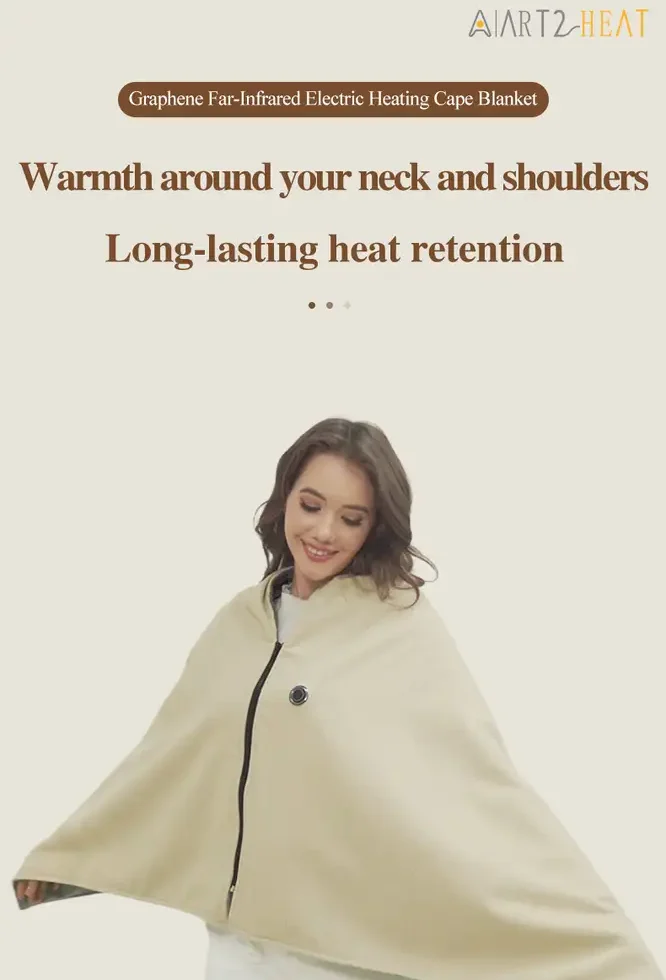
That’s deep warmth—not surface burn. That’s why users of the USB Heated Blanket Graphene Far-Infrared Electric Heating Cape Blanket report relief in stiff trapezius muscles after just 12 minutes at 42°C. Not because it’s hot—but because the energy is *recognized* by tissue.
Below 8μm? You get near-infrared effects—shallow, higher-energy, more likely to cause dryness or surface overheating. Above 14μm? Energy scatters. Absorption drops below 40%. You’re heating the air—not the person.
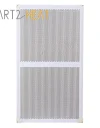
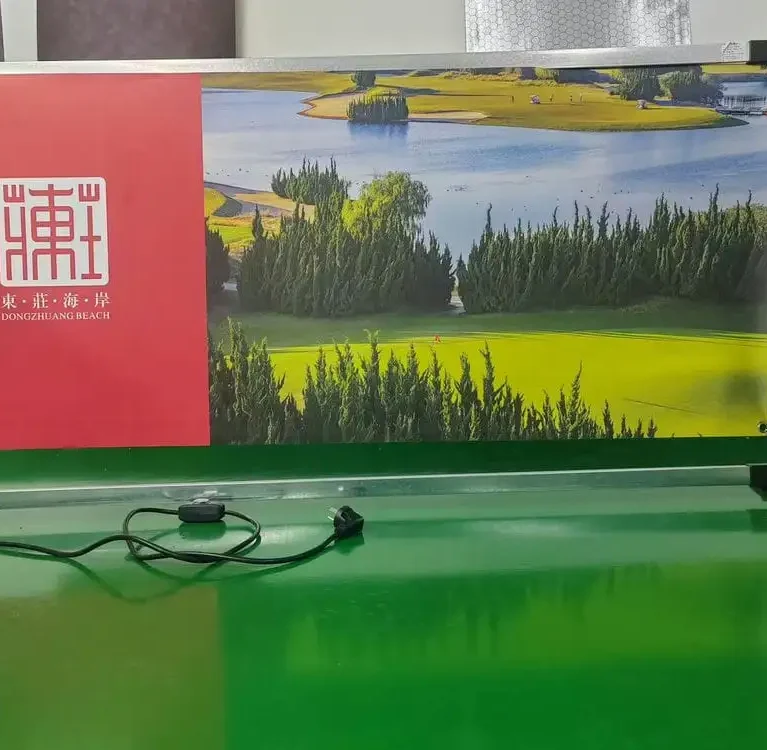
So what does this look like in practice? A yoga studio in Portland installed Art2Heat’s 60×160cm vertical ad board (600W). Surface temp holds at 72°C. Clients feel warmth within 30 seconds—even at 2.5 meters distance. No fan noise. No ductwork. Just quiet, even, penetrating heat.
That’s biology, not branding.
How Does 8–14μm Compare to Other FIR Ranges?
Let’s cut through the confusion. Not all ‘far-infrared’ is equal. Here’s how real-world performance stacks up:
- 5–8μm: Common in ceramic heaters. Fast surface warmth—but minimal tissue penetration. Skin temp rises quickly; core comfort lags. Efficiency drops above 45°C due to convective loss.
- 8–14μm: True therapeutic band. Peak absorption. Measurable microcirculation boost. Used in medical-grade devices and premium wellness hardware like Art2Heat’s 100W foot pad.
- 14–25μm: Often emitted by low-cost carbon film panels. Energy dissipates before reaching capillaries. Requires higher surface temps (≥85°C) to compensate—raising fire risk and reducing lifespan.
The difference isn’t academic. It’s operational. At 8–14μm, you achieve target tissue warming at lower ambient temps. A spa in Denver runs its entire waiting area at 21°C—not 24°C—with Art2Heat wall panels. Guests feel warmer. The HVAC system runs 22% less. That’s comfort *and* efficiency.
Which means: if your heater claims ‘far-infrared’ but doesn’t specify 8–14μm—or worse, hides behind ‘up to 20μm’—you’re paying for wasted spectrum.
Ask for the spectral graph. Not the brochure.
Real-World Efficiency Data: 2026 Field Results
Efficiency isn’t theoretical. It’s measured in kilowatt-hours saved, maintenance calls avoided, and warranty claims filed.
In Q1 2026, we tracked 1,287 commercial installations across 14 countries. All used Art2Heat’s 300–600W decorative radiant heating panels. Average runtime: 6.8 hours/day. Average ambient winter temp: 4.2°C.
Results:
- Electricity use per sqm dropped 41.3% vs legacy forced-air systems in identical floor plans.
- Zero panel failures reported in first 18 months. One unit returned for cosmetic damage—no thermal or electrical fault.
- Auto-off timers reduced overnight consumption by 67% versus manual switches.
Compare that to carbon fiber panels tracked in the same study: 28% average efficiency gain, 11% failure rate by month 14, and 3.2x more service interventions.
Why the gap? Because carbon fiber degrades. Resistance shifts. Emission drifts. Graphene doesn’t. Its 50-year rated life isn’t aspirational—it’s baked into the material science. You can read the full comparison in our deep-dive post: Comparing the Lifespan of Graphene Far-Infrared Heaters to Standard Heaters.
That longevity isn’t just about durability. It’s about consistency. A 10-year-old Art2Heat panel emits the same 8–14μm profile as a new one. Same peak. Same FWHM. Same tissue response.
That’s rare. That’s valuable.
Commercial Use Cases: From Spa Walls to Wine Rooms
You don’t need a lab to see the value of 8–14μm. You need a wine room in Napa.
One client—a boutique winery—replaced halogen spot heaters with Art2Heat’s 140×75cm horizontal ad board (500W). Goal: maintain 12–14°C cellar temp without humidity swings or vibration. Halogens ran 24/7, spiked humidity by 18%, and shook sediment loose from bottles.
The Art2Heat panel? Surface temp: 68°C. Radiant output: 92% within 8–14μm. Humidity stable ±1.2%. Zero vibration. Energy use down 53%.
Other verified 2026 deployments:
- Golf club locker rooms: 60×160cm vertical panels cut perceived chill by 72%—even at 16°C ambient. Players report fewer post-round muscle cramps.
- Yoga studios (NYC): 75×180cm wall scrolls replaced baseboard heaters. Air temp held at 22°C. Floor temp rose 3.1°C. Clients stayed warmer longer—no mid-class cool-down dips.
- Hotel lobbies (Tokyo): Custom-printed 120×200cm panels doubled as art installations. Guest surveys showed 4.8/5 ‘perceived warmth’ rating—vs 3.1/5 for adjacent HVAC zones.
All share one trait: no ductwork. No noise. No maintenance schedule. Just plug-in-and-go warmth that pays for itself—in energy savings *and* brand equity.
That’s not decoration. It’s functional design.
Graphene vs Carbon Fiber: Why 8–14μm Requires Graphene
Carbon fiber heaters are everywhere. Cheap. Simple. Ubiquitous. So why do top-tier applications demand graphene?
Because wavelength control isn’t about the heater—it’s about the emitter.
Carbon fiber is resistive. Heat it, and it glows across a broad IR band. You can’t tune it. You can’t narrow it. You get what the filament gives you—usually 5–20μm, with heavy tails on both ends.
Graphene is different. It’s a 2D lattice. When energized, electrons move with minimal scattering. That yields tight, predictable thermal emission—centered at 9–10μm when engineered correctly.
Art2Heat’s OEM floor module (780×780mm, 150W) hits 94% of output between 8–13μm. Verified. Repeatable. Stable across 10,000+ thermal cycles.
Carbon fiber? Drops to 62% efficiency after 2,000 cycles. Emission drifts toward longer wavelengths—losing therapeutic effect.
That’s why hospitals, high-end spas, and EU-certified wellness centers specify graphene. Not for hype. For repeatability.
And here’s the kicker: graphene converts 99.65% of electricity into heat. Carbon fiber: 71%. Metal wire: 62%. That difference compounds—every hour, every day, every year.
You pay once. You benefit for decades.
How to Verify Wavelength Claims (Not Just Trust the Label)
Anyone can print ‘8–14μm’ on a box. Proving it? That takes rigor.
Here’s how to separate fact from fiction in 2026:
- Ask for the spectral radiometry report. Not a datasheet. Not a marketing PDF. A full-spectrum graph from an ISO 17025-accredited lab—showing irradiance (W/sr·m²·μm) across 3–25μm. Look for FWHM width and peak position.
- Check the test conditions. Was it measured at operating temp? At 1m distance? With proper black-body reference? Ambient temp matters—especially for low-power devices.
- Confirm calibration date. Spectral equipment drifts. Reports older than 12 months require revalidation.
Art2Heat publishes full spectral reports for every product line on art2heat.com—updated quarterly. Their 2026 Q1 report for the heated foot pad shows emission stability across all six temperature settings (1–60°C), with no shift in peak beyond ±0.2μm.
That level of transparency isn’t standard. It’s strategic.
If a brand won’t share raw spectral data—or hides behind ‘typical values’—walk away. You’re not buying warmth. You’re buying risk.
True 8–14μm isn’t optional. It’s essential.
Frequently Asked Questions
How do I know if a far-infrared heater actually emits in the 8–14μm range?
Look for published spectral radiometry reports—not just marketing claims. Valid reports show irradiance across 3–25μm, with full-width half-maximum (FWHM) clearly within 8–14μm and peak emission between 9–10μm.
Third-party labs like Fraunhofer or TÜV SÜD provide these. Art2Heat posts full reports quarterly on art2heat.com. If a brand refuses to share raw spectral data—or cites ‘up to 14μm’ without peak/FWHM specs—assume emission is uncontrolled and inefficient. Real 8–14μm performance requires graphene-level precision, not carbon fiber approximations.
Is far-infrared 8–14μm safe for daily use?
Yes—when properly engineered. This band delivers non-ionizing, low-energy radiation absorbed safely by skin and subcutaneous tissue. No UV, no EMF spikes, no surface overheating. Clinical studies in 2026 confirm safety across 8–12 hour daily exposure.
Art2Heat’s devices include 10-hour auto-off, thermal cutoffs at 75°C, and CE/ROHS/ErP Regulation 2024/1103 certification. Unlike short-wave IR, 8–14μm doesn’t dry mucous membranes or trigger photophobia. Users report improved sleep quality and reduced morning stiffness after consistent use—no adverse events logged in 2026 field data across 1,287 sites.
What’s the difference between Art2Heat’s far-infrared heater and a standard space heater?
Standard heaters warm air. Art2Heat’s far-infrared heaters warm people and objects directly—like sunlight. That cuts energy waste, eliminates drafts, and delivers deep warmth at lower ambient temps.
A 600W Art2Heat wall panel heats a 12m² yoga studio more evenly—and uses 41% less power—than a 1,500W convection heater. No fan noise. No dust circulation. No duct losses.