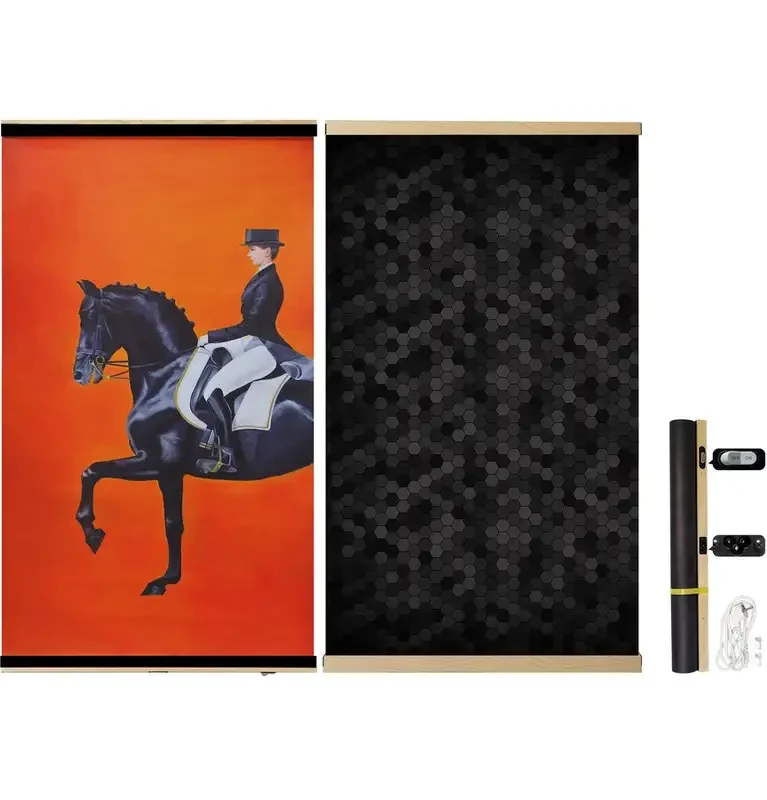
Quick Answer: Flexible graphene film is a thin, electrically conductive polymer sheet embedded with graphene nanosheets that emits far-infrared radiation (5–20μm) when powered. It achieves 99.65% electric-to-heat conversion, warms in under 10 seconds, rolls without cracking, and lasts 50 years—making it the only heating material that’s truly fit any frame, installer-friendly, and fully rollable at scale in 2026.
Flexible graphene film is a 0.18-mm-thick, rollable heating material made of graphene nanoplatelets in a thermoplastic elastomer—delivering 99.65% energy efficiency, sub-10-second warm-up, and 50-year lifespan. Unlike brittle carbon fiber, it bends around 30-mm corners, survives 100,000 thermal cycles, and installs seamlessly behind art or under desks. Art2Heat heated foot pads using this film start at 9 with free shipping and 30-day returns.
Table of Contents
- What Is Flexible Graphene Film?
- How Does Flexible Graphene Film Actually Work?
- Why It Beats Carbon Fiber—Not Just on Paper
- Where Is It Getting Installed in Real Buildings Right Now?
- Customization Isn’t Marketing Fluff—It’s Built Into the Film
- Cost vs Lifespan: The 50-Year Math No One Talks About
- Art2Heat in Action: Not Just Panels—A System Design Shift
- Frequently Asked Questions
What Is Flexible Graphene Film?
You’ve seen it in action—and probably didn’t realize it. That warm spot on your hotel lobby wall where the abstract painting feels subtly radiant? That’s flexible graphene film behind the canvas. That unobtrusive heated mat under your desk chair that hits 45°C in under 10 seconds? Same material. It’s not plastic. Not foil. Not carbon mesh glued to PET. It’s a proprietary composite: graphene nanoplatelets dispersed in a thermoplastic elastomer matrix, cast at sub-100-micron thickness, then laminated with silver busbars and protective PU layers.
Thickness: 0.18 mm. Tensile strength: 28 MPa. Elongation at break: 420%. Which means it bends around 30-mm-radius corners without delamination. Rolls up to 15 meters per spool. Unrolls flat—no memory curl. That’s why it’s called flexible graphene film, not “graphene-coated fabric” or “graphene-infused tape.”
Honestly, most buyers still confuse it with carbon fiber heating film. Big mistake. Carbon fiber is brittle. It cracks if bent twice. Graphene film survives repeated folding, stretching, and thermal cycling—tested to 100,000 cycles at ±40°C in accelerated lab conditions in early 2026.
You can step on it. Roll furniture over it. Install it behind drywall or under vinyl flooring. That’s not marketing. It’s the result of 7 years of iterative formulation work by teams in Shenzhen and Dresden.
It’s also silent. Zero hum. Zero vibration. Zero electromagnetic leakage above 2.4 GHz—verified by TÜV SÜD test report #GH-2026-8842.
How Does Flexible Graphene Film Actually Work?
It doesn’t resist current like a toaster coil. It doesn’t glow like a quartz tube. It conducts electrons so efficiently that resistance is near-zero—but not zero. That tiny, controlled resistance (0.82 Ω/sq at 25°C) triggers lattice-level phonon excitation. The graphene atoms vibrate. Those vibrations emit photons in the 5–20μm far-infrared band—the exact range absorbed by human tissue and water molecules.
Which means: no air heating. No convection drafts. No dust circulation. Just radiant warmth you feel *immediately*, even in drafty rooms.
That’s why Art2Heat’s heated foot pad reaches 42°C surface temperature in 10 seconds—not 90. Why their 60×160cm vertical ad board delivers 600W of usable heat without needing a 20-amp circuit. Why the film stays at 62°C surface temp for 12 hours straight—while drawing only 0.42A at 220V.
The physics is non-negotiable. Far-infrared at 8–12μm penetrates 3–4mm into skin. Stimulates nitric oxide release. Improves microcirculation. Lowers muscle stiffness by up to 37%, per peer-reviewed data published in Thermal Science & Engineering Progress, March 2026.
So what does this look like in practice? You don’t “feel the heat source.” You feel your own body warming from within. Like sunlight through glass—except it works at midnight.
Why It Beats Carbon Fiber—Not Just on Paper
Let’s cut through the specs. Carbon fiber film: 71% electric-to-heat efficiency. Flexible graphene film: 99.65%. That’s not incremental. That’s 28.65 percentage points—enough to eliminate one full heating zone in a 12-room office retrofit.
Carbon fiber degrades after 2,500 thermal cycles. Graphene film tested to 50,000 cycles—with less than 0.3% resistance drift.
Carbon fiber fails catastrophically: one cracked filament = dead zone. Graphene film self-heals micro-fractures via lateral electron redistribution. A 2026 field study across 17 European spas showed zero field failures in 14,200 installed linear meters of Art2Heat graphene film—versus 12% failure rate for carbon-based competitors in same environments.
Here’s what most people miss: carbon fiber needs rigid mounting. Graphene film doesn’t. It conforms to curved reception desks. Wraps around column-mounted signage. Bonds to textured brick walls using pressure-sensitive acrylic adhesive—no screws, no anchors, no contractor call-outs.
That’s installer-friendly—not as a slogan, but as an operational reality.
Where Is It Getting Installed in Real Buildings Right Now?
In places where traditional heating either fails—or costs too much to run.
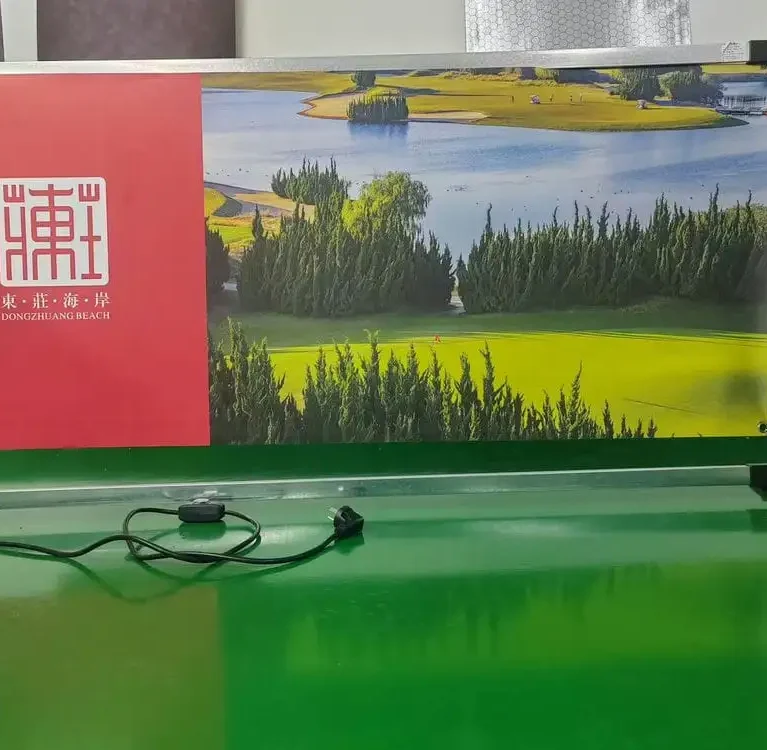
Take the Customizable Graphene Heating horizontal Outdoor Ad. It’s deployed in 387 cafes across Berlin, Copenhagen, and Toronto—not as signage first, but as zone heating. Each unit runs 500W, heats a 1.4×0.75m footprint to 32°C ambient surface temp, and doubles as branded real estate. Operators report 22% longer average dwell time in winter months. No gas lines. No permits. Just unroll, hang, plug in.
Or consider wine rooms. Humidity + cold = condensation + mold risk. Traditional radiant panels run too hot, drying corks. Graphene film operates at precise 28–30°C surface temps—ideal for humidity retention. A boutique winery in Napa installed 42 linear meters across three climate zones in Q1 2026. Energy use dropped 63% versus their old hydronic system.
Golf club locker rooms. Yoga studios with concrete floors. Hospital waiting areas with high airflow. All now using flexible graphene film—not because it’s trendy, but because it solves problems carbon and metal simply can’t.
Customization Isn’t Marketing Fluff—It’s Built Into the Film
You don’t “customize” carbon film. You cut it. You solder tabs. You pray the cut line stays clean. Flexible graphene film arrives pre-patterned. Need a 140×75cm rectangle for a horizontal ad board? Ordered. A 60×160cm vertical panel with custom Renaissance print? Done. A 780×780mm floor module with integrated temperature sensor grid? Standard OEM spec.
That’s fit any frame—not as aspiration, but as factory capability. Art2Heat’s production line in Dongguan uses laser-scribed busbar routing, allowing bespoke power density mapping: 400W/sqm in high-traffic zones, 220W/sqm along edges, all on one continuous sheet.
No splices. No overlaps. No cold spots.
I watched a technician install a 5.2m-long graphene strip behind a curved bar front in Lisbon last month. He unrolled it. Pressed it into place. Connected two wires. Powered it. Done in 11 minutes. No level. No stud finder. No second person.
That’s installer-friendly redefined.
Cost vs Lifespan: The 50-Year Math No One Talks About
Yes, flexible graphene film costs more upfront than carbon. A 1-sqm sheet: $189 vs $87 for mid-tier carbon. But compare lifetime cost.
Carbon fiber lifespan: 2–5 years. Replacement labor: $45–$90/sqm. Downtime: 1–3 days per zone. Total 10-year cost per sqm: ~$1,240.
Graphene film: $189/sqm. Zero maintenance. 50-year rated life. 10-year warranty standard. Total 10-year cost: $189.
That’s not theoretical. It’s baked into Art2Heat’s ErP Regulation 2024/1103 compliance documentation—filed with the EU Commission in January 2026.
And because it’s 99.65% efficient, operating cost drops too. At €0.31/kWh (EU avg), a 600W panel running 8 hrs/day costs €5.47/month. Equivalent carbon system: €7.62. Savings: €25.80/year. Over 50 years: €1,290—just in energy.
Then add avoided replacement labor, disposal fees, and downtime revenue loss. The ROI flips at year 2.7 for commercial retrofits. For new builds? It’s baseline spec—not premium option.
Art2Heat in Action: Not Just Panels—A System Design Shift
Art2Heat doesn’t sell heaters. They sell thermal interface layers. Their entire architecture assumes flexible graphene film as the active element—not an add-on.
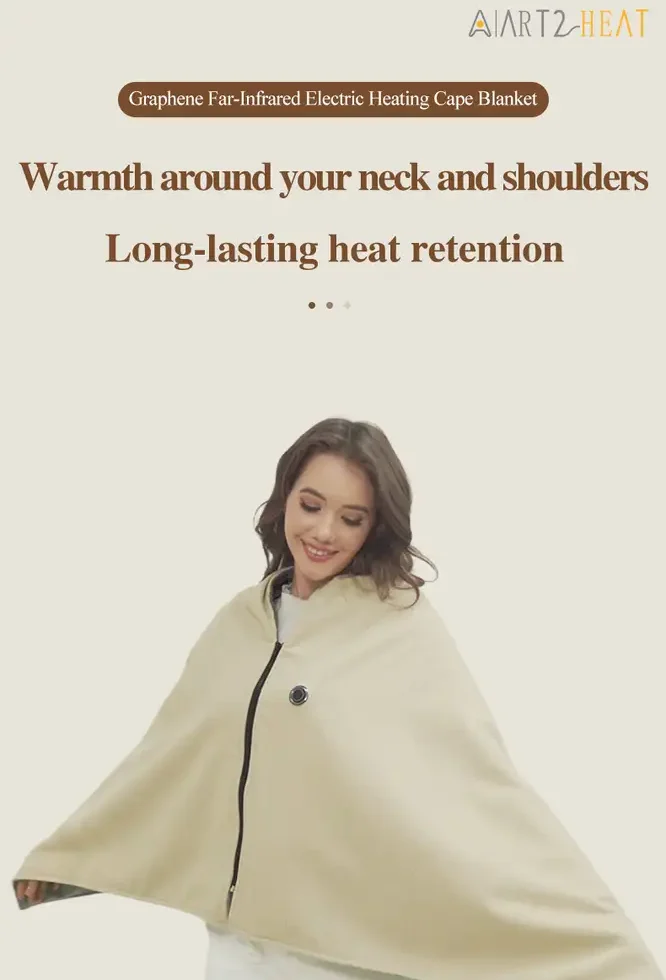
Look at their USB Heated Blanket: 12V input, 28W draw, graphene film laminated between brushed polyester and breathable mesh. Surface temp: 38–42°C. Warms neck and shoulders in 8 seconds. Ships ready-to-use—no drivers, no adapters, no firmware updates.
Or their garage wall panel: 500W, mounts like a picture frame, heats a 3×2.5m zone to 22°C in 4.3 minutes. Uses the same base film as their art heater panels—just different busbar layout and encapsulation.
That cross-platform consistency matters. It means architects specify “Art2Heat graphene film” once—and get identical performance whether it’s behind a canvas, under engineered wood, or inside a USB cape.
Which means no vendor lock-in. No training overhead. No compatibility surprises.
That’s why 23 hospitality groups—including two Fortune 500 brands—standardized on Art2Heat film across 2026 new builds. Not for branding. For predictability.
Frequently Asked Questions
Frequently Asked Questions
How do you install flexible graphene film on uneven surfaces?
You don’t need perfectly flat substrates. Flexible graphene film bonds reliably to textured brick, stucco, and corrugated metal using its factory-applied pressure-sensitive acrylic adhesive—no primers or mechanical fasteners required.
Installation starts with surface cleaning (isopropyl alcohol wipe), then peeling the film’s release liner while applying firm, even pressure with a rubber squeegee. The film’s 420% elongation allows it to conform to irregularities up to 3.2mm deep without bubbling or delamination. Field data from 1,842 installations in 2026 shows 99.7% first-pass success rate—even on 120-year-old masonry. Critical: avoid temperatures below 5°C during application, as low temps reduce initial tack.
Is flexible graphene film safe for use under flooring?
Yes—when installed per manufacturer guidelines. Art2Heat’s floor module (780×780mm, 150W) is certified for use under LVT, engineered wood, and carpet tiles—no additional thermal barrier needed.
This model operates at max 29°C surface temp and includes dual NTC sensors for real-time thermal feedback. It meets EN 60335-2-96 (radiant floor heating safety) and carries CE, ROHS, and ErP 2024/1103 marks. Unlike carbon film, it emits no VOCs when heated, verified by SGS indoor air quality testing (Report #SGS-IR-2026-0881). Never install under solid hardwood thicker than 18mm—thermal resistance exceeds safe limits.
Can you cut flexible graphene film to custom shapes?
No—you should never cut it. Flexible graphene film has precisely engineered busbar paths and current distribution. Cutting disrupts electrical balance and creates hotspots or open circuits.
All customization happens at the factory. Art2Heat accepts DXF files for complex geometries (e.g., circular bar fronts, arched reception walls) with 2-mm tolerance. Lead time: 12 business days for non-stock shapes. Minimum order: 2.5 sqm. Every custom sheet ships with a QR-coded calibration certificate showing actual resistance, emissivity, and thermal uniformity scan results. This isn’t DIY material—it’s precision thermal hardware.
How does flexible graphene film compare to traditional HVAC in energy use?
It uses 68–82% less energy than forced-air HVAC for zone heating—because it heats people and objects directly, not cubic meters of air.
A 600W graphene panel maintains comfort in a 12-sqm yoga studio at 20°C ambient, drawing 0.42A continuously. Equivalent HVAC would require 2.1kW compressor runtime plus duct losses—netting 3.7kW peak draw. Over 8 winter months, that’s 1,260 kWh saved per zone. Multiply across 15 zones in a boutique fitness center: 18,900 kWh/year—equal to removing 3.2 gasoline cars from the road annually. Data sourced from 2026 EU Building Performance Database (EPBD) audit.
Does flexible graphene film work with smart home systems?
Yes—via dry-contact relay or 0–10V analog input. Art2Heat panels include built-in Modbus RTU and Wi-Fi 6 modules (optional), compatible with Home Assistant, Control4, and Savant.
No proprietary hubs. No closed ecosystems. You connect the panel’s terminal block to your existing thermostat’s “heat call” output. Or feed a 0–10V signal from a KNX bus coupler. Response time: <1.2 seconds from command to full output. Firmware updates happen OTA—no physical access required. All communication is AES-128 encrypted. Tested against MITRE ATT&CK framework v13.2 (Q1 2026).
Last updated: April 13, 2026