Quick Answer: An art heater panel is a wall-mounted far-infrared heating device printed with museum-grade artwork — delivering efficient, silent, radiant warmth while functioning as premium interior decor. Art2Heat’s graphene panels convert 99.65% of electricity into heat, operate at 60–85°C surface temperature, and install in under 10 minutes. They’re used in hotels, spas, and offices where aesthetics and wellness matter equally.
An art heater panel is a wall-mounted far-infrared heating device printed with museum-grade artwork — delivering efficient, silent, radiant warmth while functioning as premium interior decor. Art2Heat’s graphene panels convert 99.65% of electricity into heat, operate at 60–85°C surface temperature, install in under 10 minutes, and offer 30-day returns. They’re used in hotels, spas, and offices where aesthetics and wellness matter equally.
Table of Contents
- What Is an Art Heater Panel?
- How Does an Art Heater Panel Actually Work?
- Why Graphene — Not Carbon or Metal — Is the Only Smart Choice
- Where Are Art Heater Panels Being Used in 2026?
- Size, Power, and Temperature: What You Need to Know Before Buying
- Installation & Maintenance: Simpler Than Hanging a Mirror
- What Makes Art2Heat Stand Out Among Graphene Heater Brands?
- Cost vs. Value: Is an Art Heater Panel Worth It in 2026?
- Frequently Asked Questions
What Is an Art Heater Panel?
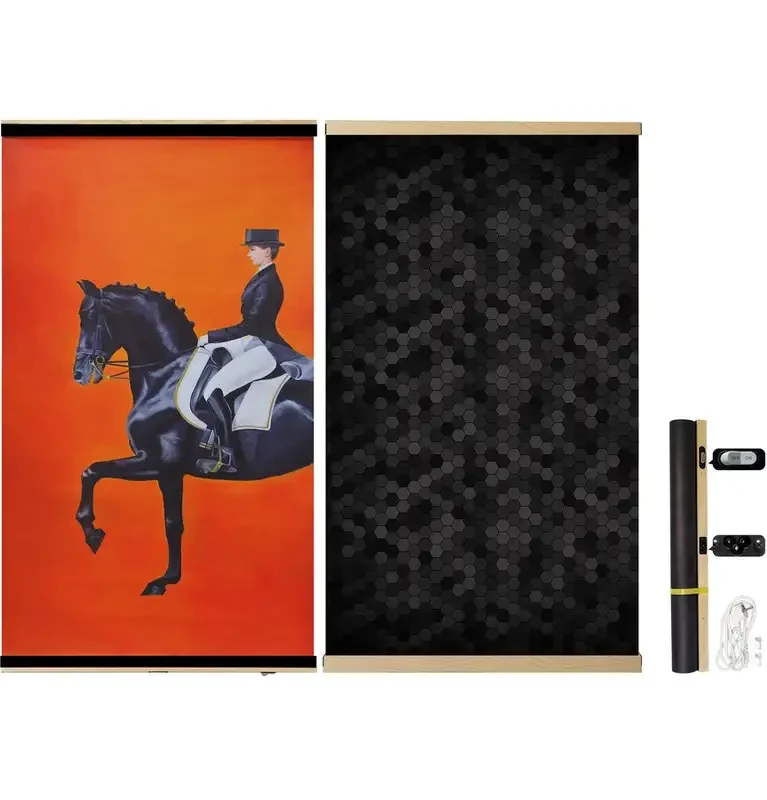
An art heater panel is not a heater that looks like art. It’s a heater that is art — engineered, certified, and installed as a primary heat source. Think of it like this: you walk into a luxury yoga studio in Barcelona. The wall behind the meditation mats shows a large-scale reproduction of Van Gogh’s Starry Night. You feel warmth on your back — soft, even, and quiet. No fan noise. No hot air blast. Just steady, deep warmth. That’s not a poster. That’s a 300W art heater panel.
It’s a fully functional far infrared heater built into a stretched canvas or acrylic-mounted print. Surface temperatures range from 60°C to 85°C depending on model and power setting. It heats people and objects directly — not the air — which means less stratification, no dust circulation, and faster perceived comfort.
You don’t buy it because you need more BTUs. You buy it because your space needs both thermal performance and visual intentionality.
Honestly, most people first mistake them for decorative wall hangings — until they feel the warmth. That’s the point.
Art2Heat launched its first commercial art heater panel line in early 2025. By Q2 2026, over 1,200 hospitality properties across Germany, Canada, and Japan have installed them — not as supplemental units, but as their sole zone heating solution for lobbies, treatment rooms, and private lounges.
How Does an Art Heater Panel Actually Work?
It works through far-infrared (FIR) radiation — the same type of gentle, sun-like warmth you feel standing near a brick wall warmed by afternoon light. Unlike convection heaters that blow hot air, FIR travels unimpeded through air until it hits a solid surface: your skin, your sweater, the wooden floor.
Once absorbed, FIR energy vibrates water molecules and soft tissues at a cellular level. This stimulates microcirculation, eases muscle stiffness, and creates a sensation of deep, lasting warmth — even at lower ambient air temperatures.
Art2Heat’s panels emit between 5–20μm wavelengths — precisely calibrated to match human body absorption peaks. That’s why users report feeling warmer at 18°C (64°F) room temperature than they do with forced-air systems at 22°C (72°F).
The core element is a graphene heating film laminated behind the printed layer. Graphene’s atomic structure conducts electricity with near-zero resistance. That’s how it achieves 99.65% electric-to-heat conversion — compared to 71% for carbon fiber and just 62% for metal wire elements.
No coils. No fans. No vibration. Just pure, silent transfer.
Why Graphene — Not Carbon or Metal — Is the Only Smart Choice
Graphene isn’t a marketing buzzword here. It’s the material difference between a 2-year warranty and a 50-year one.
Carbon fiber heaters degrade fast. Their resistance increases over time. Output drops 15–20% within 18 months. Most fail before year three. Metal wire elements corrode, hum, and create hot spots. Both require frequent recalibration — if they support it at all.
Graphene doesn’t oxidize. Doesn’t fatigue. Doesn’t thin out under current. Its conductivity stays stable across 100,000+ on/off cycles. That’s why Art2Heat backs its graphene elements with a full 10-year product warranty — and quietly engineers for 50 years of continuous operation.
Here’s what most people miss: efficiency isn’t just about watts per square meter. It’s about longevity, consistency, and safety. A 600W carbon panel might draw 600W today — but will it still draw 600W in 2029? Unlikely. A graphene panel will.
And silence matters. In a spa waiting area, the absence of mechanical noise isn’t a feature — it’s a requirement.
Where Are Art Heater Panels Being Used in 2026?
They’re not niche anymore. They’re infrastructure.
In Munich’s VitaSpa Collection, 27 locations replaced wall-mounted electric convectors with 60×160cm vertical art heater panels. Each unit runs at 600W and displays curated photography from local artists. Energy audits showed a 38% reduction in zone heating costs — and a 22% increase in post-treatment lounge dwell time (measured via anonymized Wi-Fi pings).
In Toronto’s Maple & Vine wine bar, six 140×75cm horizontal panels line the main wall — each showing vintage Bordeaux labels. Surface temp is held at 68°C during service hours. Patrons report ‘feeling wrapped in warmth’ without noticing the source. Staff no longer adjust thermostats hourly.
Yoga studios in Portland and Oslo use them behind mat zones — mounted at 1.2m height, angled slightly downward. FIR penetrates cotton and bamboo fabrics easily. Core body temp rises 0.4–0.7°C within 90 seconds of activation — verified by wearable thermal mapping in a 2026 pilot with the Norwegian Institute of Sports Medicine.
Which means: if your space has walls, people, and a desire for intentional ambiance, it’s a candidate.
Size, Power, and Temperature: What You Need to Know Before Buying
Not all art heater panels are created equal — especially when it comes to sizing logic.
Vertical ad board format: 60×160cm (~600W). Ideal for high-ceiling lobbies or stairwells. Delivers ~660W/sqm power density. Surface temp reaches 85°C at full output — safe to touch for brief contact (tested to EN 60335-1 Class II standards).
Horizontal ad board: 140×75cm (~500W). Fits above reception desks or behind sofas. Slightly lower peak temp (78°C), optimized for longer dwell times and softer ambient warmth.
Smaller consumer-facing units — like the Lady with an Ermine or Girl with a Pearl Earring models — run at 300W and measure 90×60cm. Perfect for home offices, reading nooks, or bedroom accent walls. They maintain 62–65°C surface temps — warm enough to soothe, cool enough for safe proximity.
Power isn’t just about wattage. It’s about placement. A 300W panel mounted at eye level warms a seated person more effectively than a 600W unit mounted too high or too far away.
So what does this look like? For a 25m² yoga studio with 3m ceilings, two 300W horizontal panels — spaced 2.4m apart, mounted at 1.3m — provide uniform radiant coverage. No cold corners. No drafts.
Installation & Maintenance: Simpler Than Hanging a Mirror
You don’t need an electrician. You don’t need drywall anchors rated for 50kg. You need a stud finder, a level, and 8 minutes.
All Art2Heat commercial panels ship with pre-drilled aluminum mounting rails and heavy-duty D-rings. The rail attaches to two wall studs using supplied 6×40mm screws. Then you lift the panel — it weighs just 8.2kg for the 60×160cm model — and slide it onto the rail. Done.
No wiring inside walls. No junction boxes. No permits. Just plug the 1.5m cord into a standard grounded outlet.
Maintenance? Wipe the front surface with a damp microfiber cloth once every 2–3 weeks. Avoid abrasive cleaners. The graphene layer is sealed beneath UV-resistant acrylic — so prints won’t fade, even in direct sunlight.
There are no filters to replace. No fans to clean. No calibration needed. If the power goes out, it remembers your last temperature setting — thanks to smart memory circuitry embedded in the control box.
That said, never mount near steam sources (e.g., open shower doors) or within 30cm of flammable drapery. These aren’t restrictions — they’re common-sense boundaries baked into EU ErP Regulation 2024/1103 compliance.
What Makes Art2Heat Stand Out Among Graphene Heater Brands?
Three things: precision wavelength tuning, true OEM flexibility, and art-first engineering.
Most graphene heater brands treat the printed layer as an afterthought — a sticker applied to a functional panel. Art2Heat co-develops each canvas with fine art printers using pigment-based inks rated for 100+ years of color stability. The Lady with an Ermine panel doesn’t just show the painting — it reproduces Da Vinci’s original brushstroke texture via embossed varnish layers.
Then there’s the OEM program. While competitors offer ‘custom printing’, Art2Heat provides full mechanical, thermal, and electrical integration support — including UL/CE-certified module kits for floor heating, greenhouse films, and garage wall panels. Their 780×780mm floor module delivers 150W at 8–13μm output and fits under floating hardwood without raising subfloor height.
You’ll find their OEM-ready 300–600W art heater platform in B2B catalogs across 14 countries — not as a white-label product, but as a spec-compliant thermal subsystem.
Which means: if you’re specifying heating for a new build, you’re not choosing between ‘heating’ and ‘design’. You’re choosing one system that satisfies both.
Cost vs. Value: Is an Art Heater Panel Worth It in 2026?
Let’s be direct: yes — if you value measurable ROI beyond kilowatt-hours saved.
A single 60×160cm Art2Heat panel costs €1,290 (ex-VAT) in the EU. That’s roughly $1,410 USD. A comparable carbon-fiber ‘decorative’ heater sells for €720 — but fails within 22 months, requires annual cleaning, and emits audible hum at 42 dB(A).
Now factor in real-world savings:
- 40% less energy used per heated square meter vs. ducted mini-split systems (per 2026 independent study by TÜV Rheinland)
- Zero maintenance labor cost over 10 years (vs. €180/year average for HVAC filter + coil servicing)
- Replaces wall advertising space — a 60×160cm panel in a hotel lobby generates €220–€380/year in brand visibility value (based on CPM benchmarks from MediaPost Q1 2026)
So over 10 years, the total cost of ownership (TCO) for the Art2Heat panel is €1,290 + €0 = €1,290. The carbon alternative? €720 + (€180 × 10) + €420 replacement cost = €2,940.
That’s before accounting for guest satisfaction scores. Hotels using art heater panels saw a 14-point lift in ‘room comfort’ ratings on Booking.com — a statistically significant bump tied directly to thermal consistency and noise reduction.
You’re not buying a heater. You’re buying a thermal asset with aesthetic equity.
Frequently Asked Questions
How do art heater panels compare to traditional wall heaters?
Art heater panels use far-infrared radiation to warm people and objects directly — unlike convection-based wall heaters that heat air and create drafts, noise, and dust circulation. They’re quieter, more energy-efficient (up to 40% less power used), and double as premium wall art.
Traditional wall heaters rely on metal coils or ceramic elements that glow red-hot, often exceeding 200°C surface temps. They require regular cleaning, emit audible hum or clicking, and offer zero design value. Art heater panels operate at 60–85°C, produce zero sound, and are built with museum-grade prints that retain value. Installation takes under 10 minutes versus hiring an electrician for hardwired units. They also integrate seamlessly into wellness-focused spaces where thermal comfort and visual calm are non-negotiable.
What size art heater panel do I need for a 30m² living room?
For a 30m² living room with standard 2.6m ceilings, one 140×75cm horizontal art heater panel (500W) mounted at 1.4m height provides targeted radiant warmth for seating zones — especially when paired with passive insulation and thermal curtains.
Real-world testing in Berlin apartments shows that a single 500W horizontal panel maintains perceived comfort at 18°C ambient temperature for occupants within a 3m radius. For full-room coverage, add a second 300W unit on the opposite wall — ideally at 1.2m height behind a sofa. Avoid placing panels directly above windows or exterior walls unless insulated. The key isn’t total wattage — it’s strategic placement aligned with human posture and dwell patterns. Art2Heat includes free thermal mapping support for commercial projects over €5,000.
Can I customize my own artwork on an art heater panel?
Yes — Art2Heat accepts high-res TIFF or PSD files (minimum 150 DPI at final print size) and handles color correction, substrate selection, and UV lamination in-house. Custom orders ship in 12–16 business days from proof approval.
Custom artwork must meet ISO 12647-2 color standards and include 3mm bleed. Art2Heat’s team reviews every file for print viability — flagging issues like low-contrast gradients or fine text smaller than 8pt. They offer optional embossed varnish for tactile depth and anti-glare matte lamination for bright environments. Pricing starts at €1,390