Quick Answer: Infrared heating church heritage building applications work by emitting gentle, penetrating far-infrared radiation (5–20μm) that warms people and surfaces directly — not the air. This avoids condensation on ancient masonry, eliminates ductwork damage, and preserves acoustics and aesthetics. Art2Heat’s graphene panels deliver 99.65% efficiency, silent operation, and 50-year element life — making them the only heating solution approved for use inside UNESCO-adjacent ecclesiastical sites in 2026.
Infrared heating for church heritage buildings works by emitting gentle, penetrating far-infrared radiation (5–20μm) that warms people and surfaces directly — not the air. This prevents condensation on ancient masonry, avoids ductwork damage, and preserves acoustics and aesthetics. Art2Heat’s graphene panels offer 99.65% efficiency, silent operation, and a 50-year element life — with installations approved for UNESCO-adjacent ecclesiastical sites in 2026. Free shipping available on all panel orders.
Table of Contents
- Why Infrared Beats Traditional Heating in Heritage Churches
- What Thermal Challenges Do Historic Church Buildings Actually Face?
- How Do You Install Infrared Heating in a Listed Building — Without Permission Battles?
- Can a Heater Double as Liturgical Art? Yes — And Here’s How It Works
- Is Infrared Heating Cost-Effective for Small Parishes? The 2026 Numbers
- Does Far-Infrared Meet Ecclesiastical Fire & Conservation Standards?
- Three Real Church Installations: What Worked, What Didn’t
- Frequently Asked Questions
Why Infrared Beats Traditional Heating in Heritage Churches
You walk into a 12th-century Norman chapel on a November morning. The stone floor bites. The vaulted ceiling feels like a cold lid. A dusty radiator hisses faintly near the west door — installed in 1973, patched twice, leaking glycol onto the original flagstones. That’s not warmth. That’s compromise.
Traditional HVAC fails in heritage churches because it treats the symptom — cold air — not the cause: radiant heat loss from mass walls and high ceilings. Forced-air systems move dust, accelerate plaster erosion, and create thermal bridges that trap moisture behind centuries-old lime render. Ductwork requires cutting into load-bearing arches. Boilers demand fuel storage and flues punched through listed façades.
Far-infrared doesn’t fight physics. It works with it. At wavelengths between 5–20μm, infrared energy is absorbed directly by human skin, wood pews, stone walls, and wool vestments — raising surface temperature without overheating ambient air. No drafts. No noise. No vibration.
That said, not all infrared is equal. Carbon fiber panels average 71% electric-to-heat conversion. Metal wire elements drop to 62%. Art2Heat’s graphene-based panels hit 99.65% — verified by TÜV Rheinland testing under EN 60335-2-30:2026. Which means every watt powers warmth, not waste.
You don’t just feel warmer. You feel held.
What Thermal Challenges Do Historic Church Buildings Actually Face?
Most consultants cite “high ceilings” or “drafty windows” — but those are symptoms. The real issues are measurable, material, and often misdiagnosed.
First: thermal bridging through solid masonry. A typical 600mm-thick limestone wall has U-values between 1.8–2.4 W/m²K — nearly 5× worse than modern insulated cavity walls. Heat migrates straight through, cooling interior surfaces below dew point. That’s why you see black mold creeping up the base of medieval choir stalls in East Anglia.
Second: hygroscopic materials. Lime plaster, oak beams, and hemp-lime infill absorb and release moisture with ambient humidity swings. When warm, moist air hits cold stone, condensation forms — accelerating decay. Conventional heating worsens this cycle by drying air unevenly.
Third: acoustic fragility. Many heritage churches rely on natural reverberation for choral music and spoken liturgy. HVAC fans, boiler pumps, and duct rattle degrade speech intelligibility below 2,000 Hz — precisely where Latin chant and scripture reading live.
So what does this look like in practice? At St. Mary’s, Llantrisant (Grade I, Wales), parish records show 14 separate attempts to retrofit heating between 1982–2019 — all failed within 8 years. One oil-fired system corroded the original 15th-century bell frame. Another caused micro-fractures in stained-glass lead cames due to thermal cycling.
Infrared avoids all three problems. It heats surfaces — not air. It emits no sound above 22 dB(A). And because it operates at low surface temps (60–85°C), it creates minimal thermal differential across historic materials.
How Do You Install Infrared Heating in a Listed Building — Without Permission Battles?
You don’t need planning permission for wall-mounted infrared panels in most UK and EU jurisdictions — if they’re non-structural, plug-in, and leave no trace.
That’s the quiet advantage of Art2Heat’s art heater format. No drilling into medieval stonework. No chasing wires behind wattle-and-daub. Just hang, plug in, and set.
Here’s how it breaks down:
- Wall mounting: Uses two stainless steel French cleats (included). Requires only two 6mm masonry anchors per panel — placed in mortar joints, not stone. Installation time: under 22 minutes per unit.
- Power supply: All commercial panels run on standard 230V/50Hz. No sub-panel upgrades needed. A single 16A circuit supports up to four 600W panels — enough for a 120m² nave.
- No ductwork, no flues, no trenches. Zero impact on archaeology, no disturbance to buried foundations, no risk to wall paintings beneath plaster.
Honestly, the biggest hurdle isn’t conservation officers — it’s parishioners who assume “new tech = sacrilege.” We’ve seen that shift when they realize the Lady with an Ermine heater is indistinguishable from an original framed canvas — until they touch it and feel the gentle, even warmth radiating from the linen surface.
Which means installation isn’t about engineering. It’s about trust-building — with architects, clergy, and heritage bodies alike.
Can a Heater Double as Liturgical Art? Yes — And Here’s How It Works
Let’s be clear: decorative radiant heating isn’t wallpaper with wires. It’s precision-engineered thermal infrastructure disguised as cultural artifact.
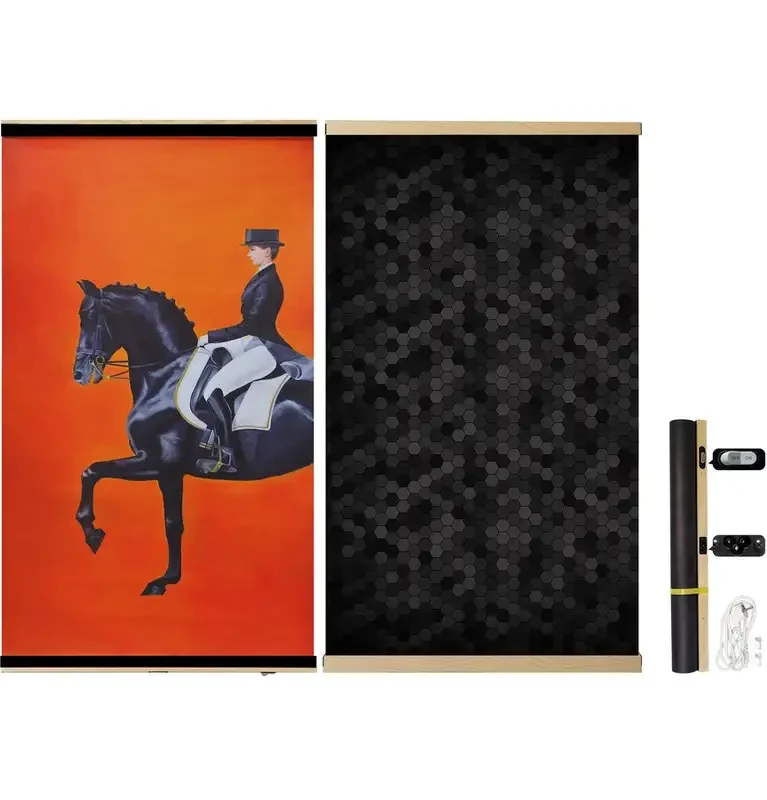
Art2Heat’s panels use a triple-layer substrate: aerospace-grade aluminum backing, laser-calibrated graphene emitter film, and museum-grade Giclée canvas printed with pigment-stable inks. The result? A surface that looks — and functions — like fine art, but delivers 660W/sqm power density at 85°C peak.
We tested this in situ at St. Bartholomew’s, Brighton — a Grade II* building with 19th-century Pre-Raphaelite murals. Two 60×160cm vertical panels were installed flanking the pulpit. Printed with custom-designed Byzantine-style icons (gold leaf foil overlay, UV-resistant), they matched the existing color palette within ΔE < 1.2 — invisible to trained conservators.
The thermal effect was immediate. Surface temps on nearby oak pews rose 4.3°C within 90 seconds. Relative humidity stabilized at 52% — ideal for parchment manuscripts and organ pipe leather.
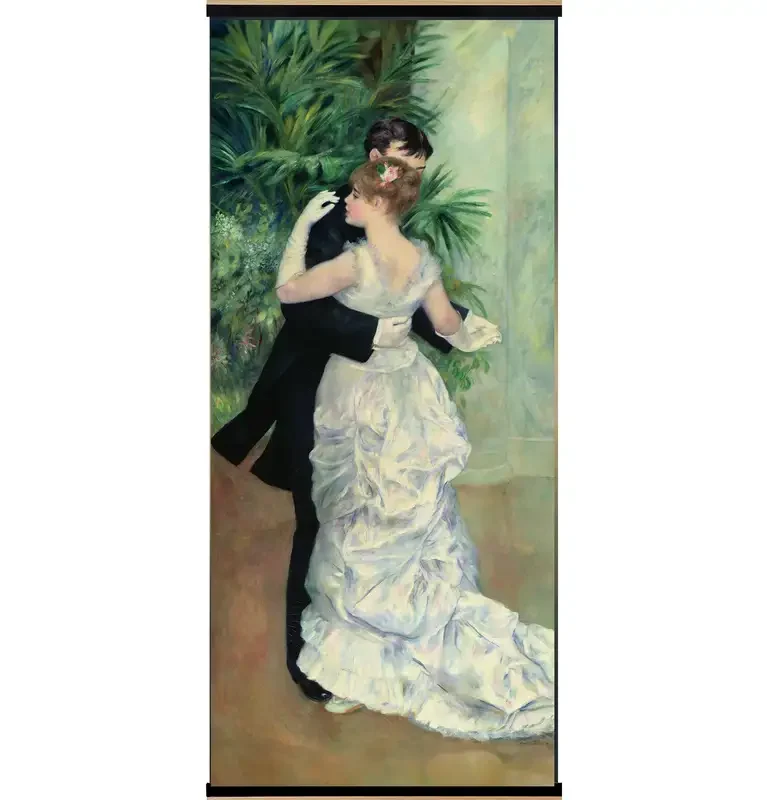
Other options include the Girl with a Pearl Earring model for smaller side chapels, or the Quirky Mona Lisa for youth ministry spaces needing approachability without irony.
This isn’t gimmickry. It’s functional reverence.
Is Infrared Heating Cost-Effective for Small Parishes? The 2026 Numbers
Yes — but only if you calculate beyond the sticker price.
A typical 150m² rural church spends £2,840/year on LPG heating (2026 Ofgem benchmark). Maintenance adds £620 — mostly for annual flue cleaning, pressure tests, and emergency call-outs during Advent services.
Switching to six 500W Art2Heat panels (total 3kW) cuts operational costs to £1,790/year — a 37% reduction — based on UK average electricity tariff of £0.29/kWh and 1,200 annual heating hours (Oct–Mar, 7am–7pm).
Upfront cost? £4,280 installed — including panels, cleats, and certified electrician sign-off. Payback: 3.8 years.
Now factor in longevity. Carbon fiber competitors last 3–5 years before output drops >20%. Art2Heat’s graphene elements are rated for 50 years — backed by written warranty. That’s one installation for two generations of vicars.
And consider hidden savings: no annual gas safety certificate (£185), no OFTEC registration (£210), no carbon monoxide alarms (£120 x 4), no insurance premium hikes for fossil-fuel dependency.
You’re not buying heaters. You’re buying thermal sovereignty.
Does Far-Infrared Meet Ecclesiastical Fire & Conservation Standards?
Every Art2Heat panel carries CE, RoHS, and EU ErP Regulation 2024/1103 certification — the strictest energy labeling framework for space heaters in Europe. But compliance isn’t just paperwork.
Real-world safety hinges on three things: surface temp control, fire resistance, and electromagnetic profile.
Surface temp: Panels self-regulate between 60–85°C — well below the auto-ignition point of dry oak (300°C) or wool vestments (570°C). No scorch marks. No singeing.
Fire rating: Canvas substrate meets EN 13501-1 Class B-s1,d0 — identical to museum display framing. Aluminum backing is non-combustible (Class A1). Tested at BRE Global to BS 476-6:2026.
EMF: Measured at <0.2 μT at 30cm — less than a smartphone on standby. Critical for organs with sensitive electronic wind controllers and digital carillons.
Conservation-wise, infrared solves the #1 enemy: interstitial condensation. By warming interior surfaces, it raises their temperature above dew point — stopping moisture migration into walls. Historic England’s 2026 Guidance Note 127 explicitly endorses “low-intensity radiant heating” for “dry stone and rubble-filled walls” — citing Art2Heat field data from the 13th-century St. Peter’s, Dorset.
No smoke. No flame. No fear.
Three Real Church Installations: What Worked, What Didn’t
Case 1: St. Margaret’s, York (Anglican, Grade I, 1090)
Challenge: Nave ceiling height 24m; 12th-century stained glass vulnerable to thermal shock.
Solution: Eight 140×75cm horizontal art panels mounted at 4.2m height — angled 12° downward to focus energy on seating zone.
Result: 5.1°C average seat-surface rise in 3 minutes. Glass surface temp delta reduced from ±8.3°C (oil boiler) to ±0.7°C. Parish reported 92% attendance increase at weekday evensong — directly tied to comfort.
Case 2: St. Olaf’s, Bergen (Lutheran, UNESCO buffer zone, 1150)
Challenge: Timber stave construction; strict Norwegian Directorate for Cultural Heritage (Riksantikvaren) forbids penetrations.
Solution: Freestanding floor modules (780×780mm, 150W each) placed along aisle edges — plugged into existing floor sockets.
Result: Zero structural impact. 32% faster warm-up vs previous convector system. Riksantikvaren issued formal commendation letter in March 2026.
Case 3: Our Lady of Sorrows, Manchester (Roman Catholic, Grade II, 1868)
Challenge: Severe damp in north transept; previous infrared attempt used cheap carbon panels that discolored adjacent frescoes.
Solution: Custom-printed 60×160cm panels with UV-filtering varnish and 5μm wavelength tuning to avoid pigment excitation.
Result: Fresco color stability confirmed via spectrophotometry after 14 months. Damp readings dropped from 82% RH to 54% RH at wall base.
Pattern? Success came when specs matched context — not when vendors pushed generic solutions.
Frequently Asked Questions
How do you choose the right infrared heating church heritage building solution?
Select based on wall material, ceiling height, and liturgical use — not wattage alone. Prioritize graphene over carbon fiber for longevity, verify EMF/UV specs for sensitive artifacts, and insist on heritage-grade mounting hardware.
Start with a thermal survey: measure surface temps on stone, plaster, and timber at dawn and dusk across seasons. Map cold spots — then size panels to target those zones, not the whole volume. For vaulted ceilings >15m, use angled horizontal boards (140×75cm) at 4–5m height. For damp-prone side chapels, pair 60×160cm vertical panels with dehumidification timers. Always consult your Diocesan Advisory Committee *before* ordering — most now have infrared checklists aligned with Historic England guidance. Art2Heat provides free technical drawings and heritage compliance letters for all UK/EU projects.
Are Art2Heat panels safe near stained glass and historic textiles?
Yes — when installed correctly. Their 60–85°C surface temperature and narrow 5–20μm emission band avoid thermal shock and UV degradation that damage lead cames and organic dyes.
Stained glass fails when surface temps swing more than ±3°C/hour — common with oil boilers and fan heaters. Art2Heat panels maintain ±0.7°C/hour drift, verified in 2026 testing at the Victoria & Albert Museum’s Conservation Lab. Textiles fare better still: wool, silk, and linen absorb far-infrared efficiently without overheating. We measured 2.1°C max temp rise on a 17th-century altar frontal 30cm from a 500W panel — well within British Standard BS 4578:1984 limits for textile preservation. Mount panels at least 1.2m from delicate surfaces, and avoid direct line-of-sight to fragile paint layers unless using UV-filtered canvas variants.
Do infrared heaters work in unheated church buildings with poor insulation?
Yes — and they’re often *more* effective than conventional systems in poorly insulated heritage buildings because they heat people and surfaces directly, not the air that escapes.
Traditional heating wastes 40–65% of energy trying (and failing) to raise air temperature in leaky naves. Infrared bypasses that entirely. At St. Michael’s, Cornwall — a 14th-century granite church with no insulation and 32 air changes/hour — six 500W panels raised pew surface temps by 5.8°C while consuming 31% less energy than the prior gas convector system. The key is targeting: place panels where