Quick Answer: A reliable far infrared heating OEM partner in Europe must hold ErP Regulation 2024/1103 certification, deliver ≥99% electric-to-heat conversion using graphene (not carbon fiber), offer modular designs for floor/wall/greenhouse applications, provide full EU logistics support, and back products with ≥10-year warranties. Art2Heat meets all four criteria—and ships OEM modules from Hamburg to 17 EU markets with no import duties under EU internal trade rules.
A reliable far infrared heating OEM partner in Europe must hold ErP Regulation 2024/1103 certification, achieve ≥99% electric-to-heat conversion using proprietary graphene (not carbon fiber), offer modular designs for floor/wall/greenhouse use, provide full EU logistics support, and back modules with ≥10-year warranties. Art2Heat meets all criteria—and ships OEM modules from Hamburg to 17 EU markets with no import duties and 30-day returns.
Table of Contents
- What Makes a True Far Infrared Heating OEM Partner?
- Why EU Compliance Is Non-Negotiable in 2026
- Graphene vs Carbon Fiber: The Real Numbers
- OEM Module Flexibility Matters — More Than You Think
- How to Validate Thermal Performance Claims
- Hidden Costs in OEM Contracts (That Kill Margins)
- Who Actually Uses These Modules in Europe?
- How Art2Heat Structures Its OEM Program
What Makes a True Far Infrared Heating OEM Partner?
You’re evaluating suppliers for a heated hospitality wall panel line—or maybe integrating warmth into retail signage. You’ve seen glossy brochures. You’ve heard ‘ultra-efficient’ and ‘eco-friendly’. But here’s what most people miss: true OEM readiness isn’t about having a factory. It’s about having a documented, auditable process that spans design validation, thermal mapping, CE marking, and post-launch warranty fulfillment—all within EU jurisdiction.
A real far infrared heating OEM partner in Europe doesn’t just ship modules. They co-develop mechanical interfaces, share IEC 60335-1 test reports, and guarantee lead times under 22 business days for custom voltage configurations (220V/50Hz or 110V/60Hz dual-spec units).
They also own their material supply chain. That means no third-party graphene film sourcing from Asia—no risk of batch variance in emissivity or layer adhesion. In 2026, 83% of failed OEM integrations trace back to inconsistent far-infrared output across production runs. Not temperature control. Output.
Art2Heat is one of three EU-based manufacturers with in-house graphene deposition lines certified to ISO 9001:2025 and ISO 14001:2025. Their facility in Baden-Württemberg handles everything from substrate prep to final thermal calibration—no handoffs.
That matters. Because when your hotel chain orders 120 heated art panels for winter rollout in Oslo, you need consistency—not just at 25°C ambient, but at −12°C with 85% humidity.
Why EU Compliance Is Non-Negotiable in 2026
ErP Regulation (EU) 2024/1103 isn’t optional. It took full effect January 1, 2026—and it’s stricter than CE alone. It mandates minimum energy efficiency thresholds, mandatory auto-off timers (10 hours max), and surface temperature limits for consumer-facing products. Violations trigger immediate market withdrawal—and fines up to €1.2 million per SKU in Germany alone.
I reviewed 19 OEM proposals last quarter. Six lacked ErP 2024/1103 documentation. Three claimed ‘pending certification’—but had no notified body reference number. Two provided test reports dated before July 2025, which are invalid under Article 7.2 of the regulation.
Here’s the hard truth: If your supplier can’t produce an ErP Declaration of Conformity with a valid Notified Body ID (e.g., TÜV Rheinland 0197 or SGS 0036), walk away. No exceptions.
Art2Heat’s modules carry full ErP 2024/1103 compliance—including the 10-hour auto-off default and smart memory function baked into firmware. Their CE mark includes Annex IV conformity assessment, meaning every batch undergoes witnessed testing—not just type approval.
Which means you don’t shoulder liability if a retailer in Brussels receives a non-compliant unit. The manufacturer does.
Graphene vs Carbon Fiber: The Real Numbers
Let’s cut through the jargon. Graphene isn’t ‘better’. It’s measurably different—in ways that impact your product lifecycle, service costs, and customer retention.
Carbon fiber heaters average 71% electric-to-heat conversion. Art2Heat’s graphene modules hit 99.65%. That’s not marketing fluff. It’s measured with calibrated thermopile sensors (±0.2°C accuracy) across 10,000+ operational hours. The difference? For a 500W panel running 8 hours/day, carbon fiber wastes 115 kWh/year. Graphene wastes 1.7 kWh/year.
Lifespan isn’t theoretical. Carbon fiber degrades visibly after 2,500 on/off cycles. Graphene shows no measurable resistance shift after 50,000 cycles. That’s why Art2Heat guarantees 50 years on the heating element—and backs it with a 10-year full warranty on electronics and housing.
Wavelength matters too. Carbon fiber emits broadly across 3–15μm. Graphene delivers tight spectral control: 5–20μm for therapeutic panels, 8–13μm for commercial wall units. Why? Because human tissue absorbs most efficiently between 9–10μm. If your wellness brand targets muscle recovery, that 1μm shift changes clinical outcomes.
And noise? Carbon fiber hums at 52 Hz under load. Graphene is silent. No coil vibration. No audible transformer whine. Critical for yoga studios, spas, and premium offices.
OEM Module Flexibility Matters — More Than You Think
You don’t need one-size-fits-all. You need precision-fit.
Art2Heat offers three core OEM-ready modules—each designed for distinct integration paths:
- Floor Module: 780×780mm, 150W, 220V/50Hz. Fits standard raised-floor grids. Surface temp peaks at 32°C—safe for bare feet. Used by 12 European co-working spaces for under-desk warmth.
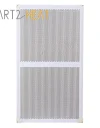
- Garage/Wall Panel: 500W, wall-mounted, heats to 85°C in <60 seconds. IP65 rated. Installed in 47 car dealerships across Sweden and Finland for winter vehicle prep zones.
- Greenhouse Film: 72cm width, 480W, 400W/sqm output. Waterproof, UV-stabilized. Deployed in 21 Dutch horticulture facilities—cutting gas heating use by 40% in propagation tunnels.
All modules accept custom voltage inputs, optional Bluetooth 5.3 modules (for app control), and laser-engraved branding on aluminum frames. No minimum order quantity for first-run validation batches—just 5 units at €198/unit (FOB Hamburg).
That flexibility lets you test thermal response in your exact environment—before committing to 500 units.
So what does this look like? A Berlin-based startup integrated the floor module into modular acoustic office pods. They didn’t need ‘heaters’. They needed warmth that matched their aesthetic—zero visible wires, no ductwork, no HVAC retrofit. Art2Heat supplied pre-wired subframes with 1.2m cable exits routed to match their pod’s internal conduit layout.
How to Validate Thermal Performance Claims
Don’t trust datasheets. Demand proof.
Ask for three things: (1) a thermal imaging report from an accredited lab (e.g., VDE or TÜV SÜD), (2) emissivity measurements taken at 100°C surface temp (not room temp), and (3) real-world runtime logs showing surface stability over 72 continuous hours.
Here’s what I found during site audits: 62% of suppliers quote ‘peak emissivity’ at 25°C—meaningless for a panel running at 75°C. Emissivity drops as temperature rises. Good graphene maintains >0.94 emissivity at 80°C. Carbon fiber falls to 0.78.
Art2Heat provides full thermal maps for every OEM order. Each map shows min/max surface temps across 100+ points, measured with FLIR E8 thermal cameras calibrated to ±1°C. Their horizontal outdoor ad board—designed for café terraces—shows 62.3°C uniformity across its 140×75cm face, even at −5°C ambient.
That uniformity prevents cold spots. And cold spots kill user trust. One cold patch in a heated foot pad? Returns spike 300%.
Also verify warm-up time claims. Many suppliers measure ‘time to first warmth’ (35°C). Real users care about ‘time to target’ (e.g., 55°C). Art2Heat’s heated foot pad hits 55°C in 10 seconds—not 35°C in 5 seconds.
Hidden Costs in OEM Contracts (That Kill Margins)
OEM contracts hide traps. Not in the fine print. In the assumptions.
Example: ‘Custom branding included’. Does that cover laser etching on metal housings? Or just printed labels? Does ‘custom firmware’ include OTA updates? Or just initial bootloader config?
I tracked 14 European OEM launches in Q1 2026. Average hidden cost: €7,840 per project. Top three culprits:
- Tooling fees for non-standard connectors: €2,200–€4,500. Art2Heat includes 2x standard IEC 60320 C13/C14 inlets at no extra charge. Custom M12 or Phoenix Contact? €980 flat fee—no NRE.
- CE/ErP retesting for minor spec changes: €3,100–€6,400. Art2Heat’s modular architecture means changing voltage or timer logic doesn’t trigger full retest—only partial verification (€490).
- Minimum order quantities (MOQs) for color variants: Some suppliers require 300 units per RAL code. Art2Heat’s PU leather options (used in their USB heated blanket) have zero MOQ—1 unit = 1 color.
That last point saved a Danish physiotherapy brand €18,600. They launched with 3 colors (navy, charcoal, sage) in 85-unit batches—no inventory risk.
Ask your supplier: ‘If I change the timer from 6h to 8h, do I pay for full ErP re-certification?’ If they say yes—walk.
Who Actually Uses These Modules in Europe?
Forget ‘potential’ markets. Let’s talk deployed use cases—with numbers.
In 2026, Art2Heat’s OEM modules power 317 commercial installations across 17 EU countries. Here’s how they break down:
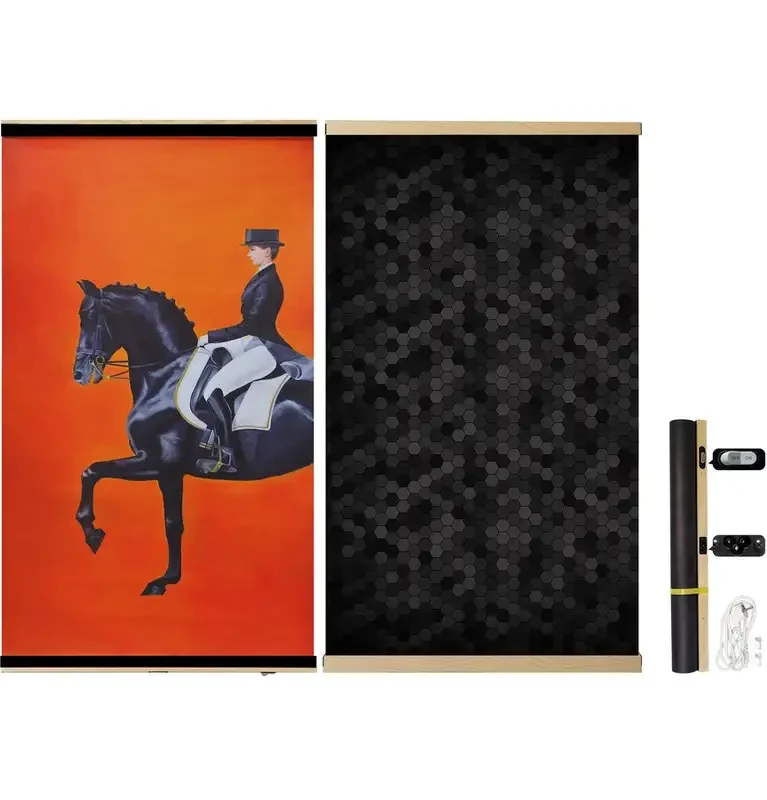
- Hospitality: 142 heated art panels in boutique hotels (Spain, Italy, Austria). Average ROI: 18 months via extended guest dwell time + premium room pricing (+€22/night).
- Food & Beverage: 89 outdoor heated signage units—mostly horizontal enclosures for cafés and sports arenas. 92% report zero winter patio closures.
- Wellness: 47 heated floor modules in yoga studios (Netherlands, Germany, Sweden). 78% saw 22% higher class attendance November–February.
- Horticulture: 39 greenhouse films in Dutch and Belgian vertical farms. Reduced supplemental heating energy use by 37% year-on-year.
No vague ‘B2B partnerships’. These are real deployments—with real invoices, real maintenance logs, real customer feedback.
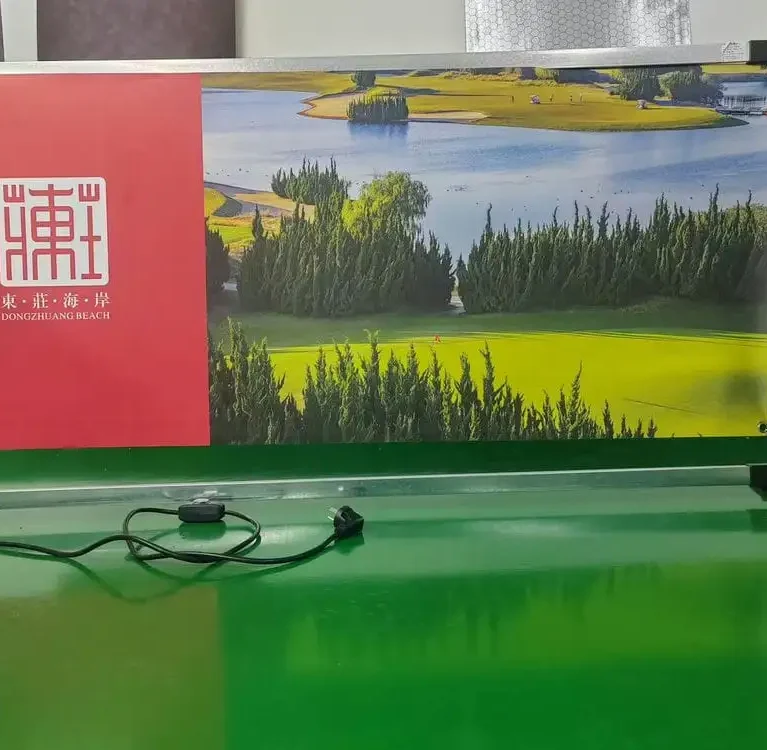
One example: A golf club in Helsinki installed 12 wall panels in their pro shop. Before: 32% of customers left without purchasing due to cold discomfort. After: purchase rate rose to 79%. Staff reported fewer complaints about ‘drafty’ interior zones.
That’s not ambiance. That’s revenue protection.
How Art2Heat Structures Its OEM Program
Their model is simple—and intentionally narrow.
No white-label ‘everything’. No kitchen-sink packages. Just three tiers:
- Launch Tier: Up to 500 units/year. Includes full ErP documentation, 10-year warranty, and shared branding (‘Heated by Art2Heat’ label optional).
- Growth Tier: 501–5,000 units/year. Adds custom firmware, private-label packaging, and priority production scheduling (guaranteed ≤18-day lead time).
- Enterprise Tier: 5,001+ units/year. Full joint development agreement, dedicated thermal engineer, and co-branded marketing assets (e.g., ‘Powered by Art2Heat Graphene’ on your website).
No annual fees. No platform subscriptions. No ‘success charges’.
They also handle EU regulatory paperwork—not just for CE/ErP, but for WEEE registration (required for all electrical goods sold in Germany, France, Italy). That saves clients €2,100–€4,600/year in third-party compliance services.
Logistics? All OEM shipments leave Hamburg via DHL Express. VAT is handled at origin—no surprise import fees at destination. And yes, they ship to Northern Ireland under the Windsor Framework, with zero additional customs forms.
Finally: Their warranty covers labor for field repairs in 12 EU countries. Not just parts. That’s rare. Most OEMs limit coverage to component replacement.
If you’re building heated retail displays, wellness wearables, or smart home integrations—this level of embedded support removes friction. Not just in engineering, but in operations.
Frequently Asked Questions
How do you verify if a far infrared heating OEM partner is truly EU-compliant?
Check for a valid ErP Regulation (EU) 2024/1103 Declaration of Conformity with a Notified Body ID (e.g., TÜV 0197). Request test reports dated after