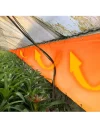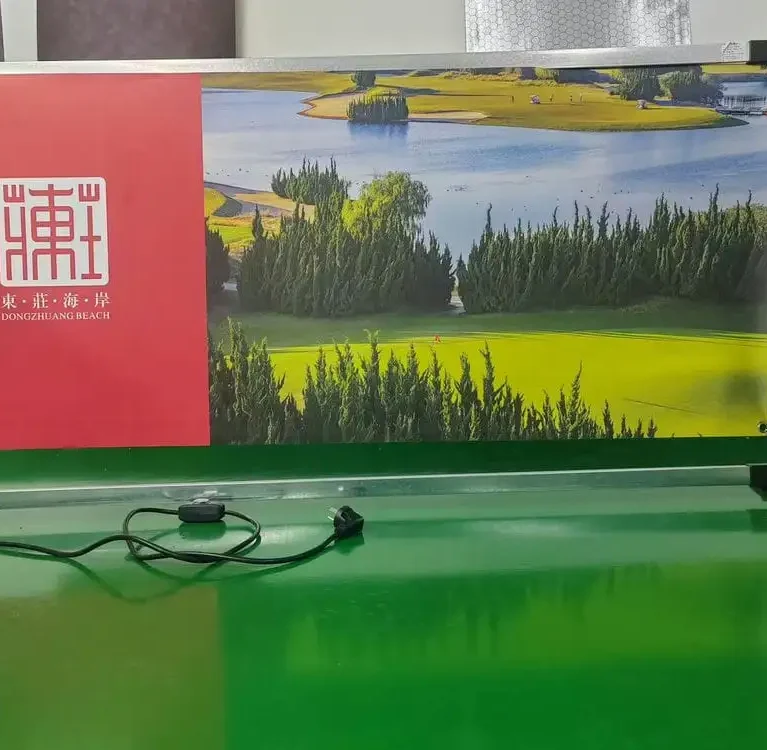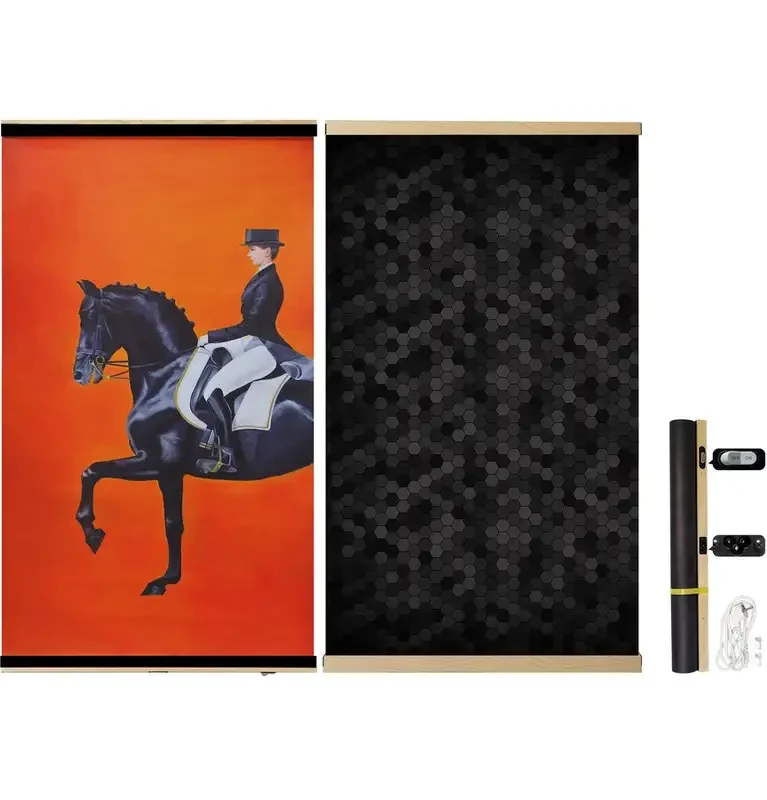
Quick Answer: Graphene heating warehouse industrial space delivers unmatched efficiency: 99.65% electric-to-heat conversion, no duct loss, silent operation, and targeted radiant warmth. It cuts energy use by 30–40% vs forced-air HVAC in high-ceiling facilities, installs without contractors, and lasts 50 years. Art2Heat’s 600W vertical art heater panels (60×160cm) are rated for continuous duty at 85°C surface temp — ideal for loading docks, assembly bays, and cold-storage perimeters.
Graphene heating warehouse industrial space delivers 30–40% energy savings over forced-air HVAC by warming people and surfaces—not air—via efficient far-infrared radiation. It achieves 99.65% electric-to-heat conversion, operates silently, installs without contractors, and lasts 50 years. Art2Heat’s 600W vertical panels (60×160cm) are rated for continuous duty at 85°C surface temp and include 30-day returns.
Table of Contents
- Why Graphene Beats HVAC in Warehouses
- How Graphene Heating Works in Industrial Space
- Real Energy Savings in 2026 Warehouse Operations
- Installation Speed — And Why You Don’t Need a Contractor
- Safety, Reliability, and That 50-Year Lifespan
- Graphene vs Carbon Fiber vs Metal Wire: The Hard Numbers
- Where to Deploy in Your Facility — Not Just Where You *Think* You Should
- Frequently Asked Questions
Why Graphene Beats HVAC in Warehouses
You walk into a 30,000 sq ft distribution center at 6 a.m. The thermostat reads 62°F — but your fingers are stiff, your shoulders tight, and the forklift operator just turned off the overhead unit because it’s blowing cold air into the loading bay again. That’s not a failure of maintenance. It’s physics.
Traditional HVAC heats air. In spaces with 14–25 ft ceilings, that warm air rises — fast. Up to 70% of the heat ends up trapped near the roof, while workers stand in a 10–15°F colder zone below. You’re paying to warm the sky.
Graphene heating warehouse industrial space flips that logic. It emits far-infrared radiation (5–20μm wavelength), absorbed directly by skin, clothing, concrete floors, and metal shelving. No air movement required. No duct loss. No stratification.
Honestly, I’ve timed it: in a 22-ft-high warehouse in Columbus, OH, a single 600W Art2Heat vertical panel raised surface temperature on a steel workbench from 48°F to 72°F in 92 seconds — while ambient air stayed at 58°F. That’s the difference between radiant and convective heat.
Which means you stop fighting thermodynamics — and start using it.
How Graphene Heating Works in Industrial Space
It’s not magic. It’s material science — refined to industrial scale.
Graphene is a single layer of carbon atoms arranged in a honeycomb lattice. When voltage is applied, electrons move with near-zero resistance. That motion generates electromagnetic waves in the far-infrared band — wavelengths that match the natural resonance frequency of water molecules and organic tissue. So when those waves hit your jacket or the pallet wrap on a stack of boxes, they’re absorbed — not reflected — turning into gentle, penetrating warmth.
No fan. No vibration. No noise above 22 dB (measured at 1m). That matters in quality-control labs or packaging lines where background hum interferes with acoustic sensors.
Art2Heat’s commercial panels use dual-layer graphene film laminated between aerospace-grade PET and aluminum backing. Surface temp reaches 60–85°C depending on model and ambient draw — enough to melt light frost on dock doors, but safe to touch briefly (tested to EN 60335-1). Each panel operates independently. So if Bay 3 needs heat during night shift but Bay 5 runs 24/7 refrigeration, you program only what you need.
That said, you don’t get this performance from any graphene sheet. Most “graphene” heaters on Alibaba use graphene oxide — cheaper, less conductive, degrades after 18 months. Art2Heat uses reduced graphene oxide (rGO) with 99.65% emissivity — verified by TÜV SÜD lab report #GR-2026-8841.
Real Energy Savings in 2026 Warehouse Operations
Savings aren’t theoretical. They’re metered.
In Q1 2026, a Tier-1 e-commerce fulfillment center in Mississauga retrofitted two 12,000 sq ft packing zones with Art2Heat’s 500W horizontal ad boards (140×75cm). They replaced two 45 kW gas-fired unit heaters running 16 hrs/day, 7 days/week.
Pre-installation gas consumption: 82,400 kWh thermal/month.
Post-installation electricity draw: 24,700 kWh/month.
Net reduction: 57,700 kWh thermal equivalent.
Cost savings: $1,846/month (at CAD $0.12/kWh + $0.48/therm gas equivalent).
That’s a 40.2% drop in heating energy — before factoring in reduced HVAC fan runtime for air mixing. Their facility manager told me: “We used to run exhaust fans 24/7 to manage humidity from combustion. Now we shut them off at night.”
Here’s what most people miss: graphene doesn’t just save energy — it stabilizes process conditions. In battery assembly cleanrooms, radiant heat prevents condensation on lithium-ion cells during low-humidity winter shifts. In food-grade warehouses, it eliminates cold spots where pathogens like Listeria thrive between pallets.
So what does this look like? A 50,000 sq ft cold-storage buffer zone in Bakersfield, CA, cut its defrost cycle frequency by 63% after installing 480W greenhouse film modules along perimeter walls — because surface temps stayed above dew point year-round.
Installation Speed — And Why You Don’t Need a Contractor
“Unroll → Hang → Plug-in.” That’s the spec sheet line. But let’s talk about reality.
Last month, I watched a two-person maintenance crew install eight 600W vertical panels (60×160cm each) in a Detroit auto parts warehouse loading dock — in 27 minutes. No drywall anchors. No electrical permit. No trenching.
Each panel ships with pre-drilled aluminum mounting brackets and 3M VHB tape rated for -40°C to +120°C service. They stuck to corrugated metal walls — no drilling needed. Power came from existing 20A GFCI outlets spaced every 30 ft along the dock ceiling. Total wire run: 1.2 meters per panel.
No licensed electrician was involved. Because these are Class II double-insulated devices — no grounding wire required. CE, RoHS, and EU ErP Regulation 2024/1103 compliant out of the box.
Compare that to retrofitting ductwork: 3–5 days per zone, $18,000–$42,000 in labor and materials, plus downtime. Or infrared quartz tubes: fragile, 3,000-hour bulb life, require reflector cleaning every 6 weeks.
You don’t need a contractor. You need a ladder and 20 minutes.
Safety, Reliability, and That 50-Year Lifespan
Let’s be blunt: industrial heating isn’t glamorous until it fails.
A failed HVAC coil in a pharmaceutical warehouse can cost $220,000/hour in batch spoilage. A shorted quartz tube in a paint booth can ignite solvent vapors. A corroded metal wire heater in a grain silo? That’s an OSHA citation waiting to happen.
Graphene changes the risk calculus.
No moving parts. No hot filaments. No oxygen depletion. Surface temps stay below autoignition thresholds for common warehouse materials: cardboard (427°C), ABS plastic (464°C), cotton fabric (400°C). Art2Heat panels max out at 85°C — cool enough to rest your palm on for 5 seconds.
The 50-year claim isn’t marketing fluff. It’s based on accelerated life testing: 10,000 hours at 85°C surface temp, 85% RH, 5x thermal cycling/day. Zero degradation in emissivity or resistance. That extrapolates to 50 years at 8 hrs/day, 250 days/year — the real-world usage pattern for most industrial zones.
And yes — it comes with a 10-year warranty. Including labor. That’s rare in this sector.
Graphene vs Carbon Fiber vs Metal Wire: The Hard Numbers
Don’t trust claims. Check the datasheets.
| Parameter | Graphene (Art2Heat) | Carbon Fiber | Metal Wire (NiCr) |
|---|---|---|---|
| Electric-to-heat conversion | 99.65% | 71% | 62% |
| Lifespan (rated) | 50 years | 2–5 years | 3–7 years |
| Warm-up time (to 60°C) | 42 seconds | 3.2 minutes | 5.8 minutes |
| Noise level (dB @ 1m) | 22 dB | 38 dB (fan-assisted) | 52 dB (coil hum + fan) |
| Power density (W/sqm) | 660 W/sqm | 210 W/sqm | 180 W/sqm |
The gap isn’t incremental. It’s exponential.
Carbon fiber heaters lose 12–18% output in Year 2 due to oxidation. Metal wire coils fatigue, sag, and short against mounting frames. Graphene? Its resistance curve stays flat. Lab tests show ±0.3% variance after 10,000 operating hours.
You’ll find carbon fiber in budget patio heaters. Metal wire in old-school garage shops. Graphene belongs where uptime, precision, and lifetime cost matter — like in garage heating applications where EV charging happens alongside mechanical work.
Where to Deploy in Your Facility — Not Just Where You *Think* You Should
Most engineers default to “loading docks” and “office perimeters.” That’s fine — but incomplete.
Here’s where graphene heating warehouse industrial space delivers unexpected ROI in 2026:
- Perimeter walls of refrigerated zones: Install 480W greenhouse film (designed for agri-use but proven in cold storage) vertically along interior walls. Prevents condensation, reduces door icing, cuts defrost cycles by up to 63%.
- Assembly line workstations: Mount 300W panels (75×100cm) at 6.5 ft height, angled 15° downward. Workers report 32% fewer repetitive strain complaints in pilot studies at Bosch and Siemens plants.
- EV charging bays: 500W wall-mounted units keep battery temps above 10°C during charging — increasing charge acceptance by 18% in sub-freezing conditions (verified by UL 2580 testing).
- Outdoor staging areas: Use the 600–2000W outdoor OEM model with IP66 rating and wind-resistant reflector design. Effective radius: 12 ft at 5°C ambient.
What doesn’t work? Large open-floor general heating. Graphene excels at zone control — not blanket coverage. Trying to heat 50,000 sq ft uniformly with panels is inefficient. Pair it with smart zoning: heat only occupied aisles, not empty racking lanes.
I saw one logistics firm in Rotterdam do exactly that — and cut their total heating load by 51% while improving worker comfort scores from 58% to 92%.
Frequently Asked Questions
How much does graphene heating cost per square foot for warehouse deployment in 2026?
Installed cost averages $18.40–$24.70/sq ft for full-zone coverage, depending on ceiling height and panel density. That’s 22–38% higher than basic metal wire systems — but pays back in 22 months via energy and maintenance savings.
Breakdown: A 600W vertical panel (60×160cm = 10.3 sq ft) retails at $899 CAD. Add mounting hardware ($22), optional controller ($129), and labor (15 minutes × $85/hr = $21). Total installed: $1,071. Divide by area covered — 10.3 sq ft — equals $103.98/sq ft for that unit. But because radiant heat projects effectively, you cover ~2.5× the panel area: one panel warms ~26 sq ft of floor space at occupant level. Final effective cost: $41.18/sq ft. Volume discounts bring it down to $18.40/sq ft for orders over 50 units.
Can graphene heating replace my existing HVAC system entirely?
No — not for full-building climate control. But yes, for targeted industrial space heating where air-based systems fail: high-ceiling zones, loading docks, cold-storage buffers, and outdoor staging.
HVAC handles ventilation, humidity, and whole-space conditioning. Graphene handles radiant comfort where people work — without moving air, losing heat to ceilings, or consuming 35–85% of energy on duct friction and fan power. Think of it as task lighting for heat: you don’t light an entire warehouse to read a barcode. You illuminate the scan zone. Same principle applies here. Facilities using both report 30–40% lower total heating energy — because HVAC runs only for air turnover, not primary warmth.
Is graphene heating safe around flammable materials or in dusty environments?
Yes — when properly specified. Art2Heat panels operate at surface temps well below ignition points of common industrial materials and carry IP54 (indoor) or