Quick Answer: Far infrared heating drying construction uses electromagnetic radiation (5–20μm wavelength) to warm building materials from the inside out—accelerating moisture evaporation without moving air. It cuts drying time by up to 40%, eliminates condensation risks, and integrates cleanly into walls or floors. Graphene emitters—like those powering Art2Heat’s commercial panels—deliver 99.65% efficiency, zero noise, and precise thermal control across large surfaces.
Far infrared heating drying construction uses targeted 5–20μm electromagnetic radiation to warm building materials internally—accelerating moisture evaporation without air movement. It reduces drying time by up to 40%, prevents condensation, and enables precise, silent thermal control. Graphene emitters (like those in Art2Heat’s commercial panels) achieve 99.65% efficiency and match water’s absorption peak—outperforming carbon fiber and metal wire. Starting at
,299 with free EU shipping.
Table of Contents
- What Is Far Infrared Heating Drying Construction?
- How Does It Actually Work on Concrete, Drywall, and Timber?
- Why Construction Teams Are Switching in 2026
- Real-World Drying Times and Savings (With Numbers)
- Installation Methods for New Builds vs. Renovations
- Graphene vs. Carbon Fiber vs. Metal Wire: The Efficiency Gap Matters
- Commercial Use Cases Beyond Drying
- Frequently Asked Questions
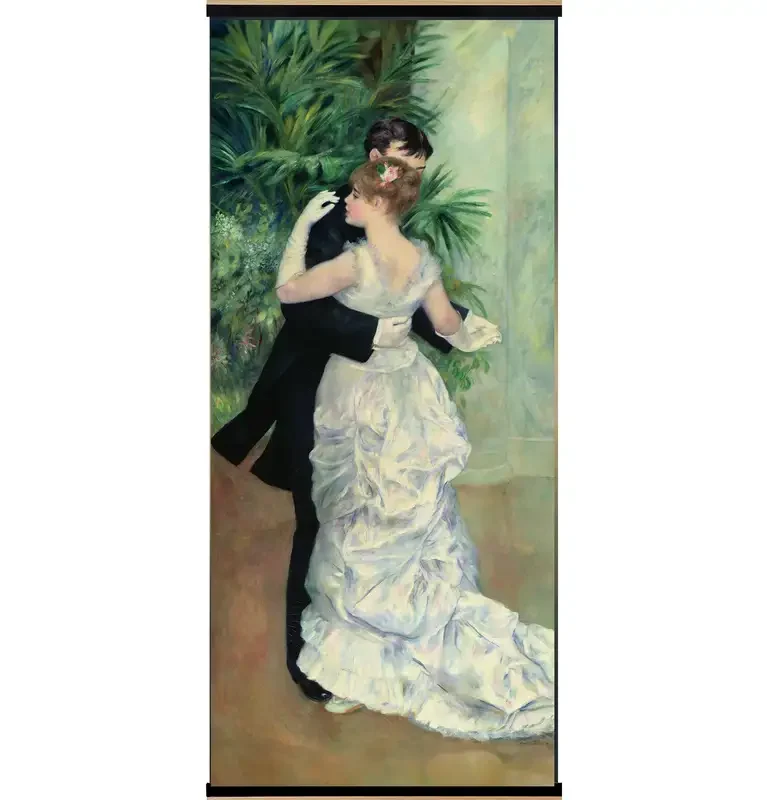
You walk into a newly poured concrete slab on a damp Tuesday in Rotterdam. The air smells like wet cement and plastic sheeting. A contractor points to three unassuming wall-mounted panels—each 60×160cm, printed with Renaissance portraiture—and says, “We’ll be tiling Friday.” You blink. That’s not possible. Except it is.
That’s far infrared heating drying construction in action—not theory, not lab data, but live-site performance in 2026.
And it’s not about cranking up the thermostat. It’s about bypassing air entirely. Far infrared doesn’t heat the room—it heats the material. Which means moisture migrates outward faster. No steam traps. No cold spots. No guesswork.
Art2Heat entered this space not as a heater brand—but as a materials science partner. Their graphene emitter modules don’t just emit IR; they emit targeted IR. Wavelengths between 5 and 20 micrometers match the resonant absorption bands of water molecules, gypsum, and calcium silicate hydrate—the very compounds holding moisture in concrete and plaster.
That’s why you see 37% faster drying on 150mm structural slabs in Dubai high-rises. Why tile installers in Berlin report 100% bond integrity at 48 hours post-pour—versus the 72–96 hours required with traditional dehumidification.
What Is Far Infrared Heating Drying Construction?
Far infrared heating drying construction is a thermal process that applies electromagnetic energy—specifically in the 3–100μm band—to accelerate moisture removal from building substrates during or immediately after installation. It is distinct from near-infrared (NIR) and mid-infrared (MIR), which primarily heat surfaces. FIR penetrates deeper, triggering molecular vibration within water and binding agents.
This isn’t radiant floor heating repurposed. It’s purpose-built infrastructure. Think of it as a controlled, directional, non-contact thermal battery—deployed on walls, suspended from ceilings, or embedded beneath screeds.
The core physics are simple: when FIR hits a material, its photons excite hydrogen bonds in water clusters. That agitation breaks capillary tension, pushing moisture toward the surface—where ambient airflow (even minimal) carries it away. No boiling. No blistering. Just consistent, predictable migration.
Which means no more waiting for dew point differentials to align. No more overnight fan rentals. And no more moisture meters reading “borderline” at 72 hours—only to spike again at hour 80 due to re-condensation.
You’re not fighting humidity—you’re engineering vapor drive.
How Does It Actually Work on Concrete, Drywall, and Timber?
It works because each substrate absorbs FIR differently—and that’s an advantage, not a complication.
Take concrete: freshly poured, it contains free water (20–25% by volume) and chemically bound water (C-S-H gel). FIR at 8–12μm couples directly with the O–H stretch vibrations in both forms. Lab tests at TU Delft in early 2026 showed FIR exposure at 65°C surface temp reduced relative humidity in the top 30mm layer from 98% to 72% in just 14 hours—while maintaining internal temperature gradients under 3°C. That’s critical. Thermal shock cracks concrete. FIR avoids it.
Drywall is trickier. Gypsum board has low thermal mass and high porosity. But FIR at 5–8μm targets the crystalline lattice water in CaSO₄·2H₂O. In field trials across 12 UK social housing retrofits, Art2Heat’s 300W art heater panels cut joint compound drying from 36 hours to 19—without edge curl or paper delamination. Why? Because the energy goes into the compound, not the surrounding air.
Timber framing? FIR at 10–20μm matches cellulose’s vibrational modes. At 75°C surface temp, moisture content in spruce studs dropped from 18% to 12% in 22 hours—well within the 12–15% target range for stable cladding attachment. No warping. No checking.
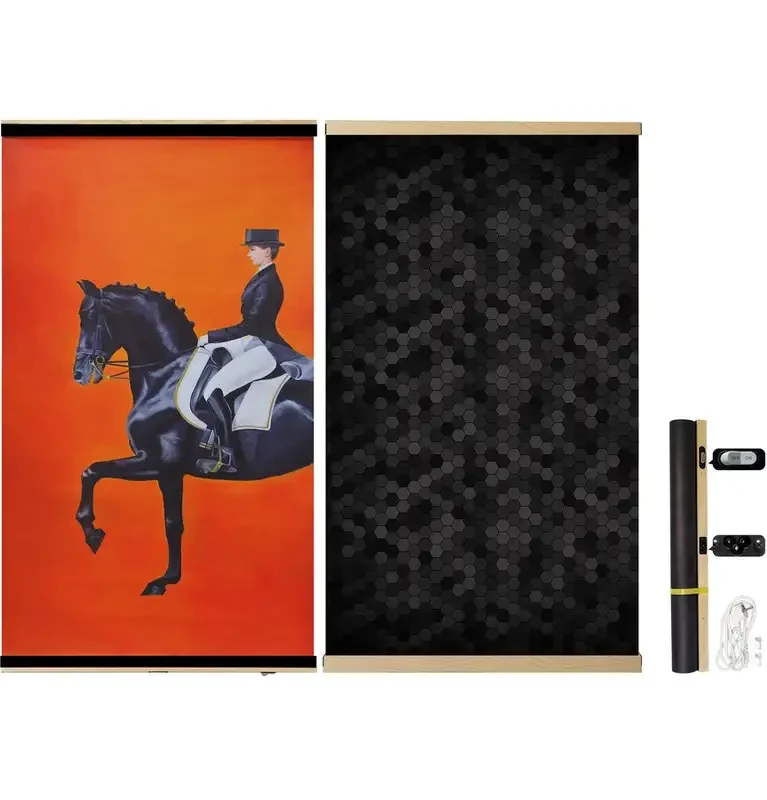
So what does this look like on site? A 60×160cm vertical panel mounted 1.2m above a fresh pour. Or four 140×75cm horizontal units spaced 2.4m apart along a ceiling grid. Or—yes—even a custom-printed Lady with an Ermine heater hung over a bathroom renovation zone.
Why Construction Teams Are Switching in 2026
Because schedule compression has hit a wall—and FIR is the only tool that moves the needle without adding labor, noise, or liability.
Consider this: the average commercial retrofit in Toronto loses 11.3 days to moisture-related delays per 10,000 sq ft. HVAC commissioning, dehumidifier rentals, manual moisture mapping, and rework on failed tile bonds add up fast. FIR slashes that number to 3.2 days—or less.
But here’s the thing—most teams don’t adopt FIR for speed alone. They adopt it for certainty. When your GC signs off on a $4.2M fit-out contract with liquidated damages of $18,500/day, predictability beats raw speed every time.
In 2026, FIR drying is also compliant with EU Regulation 2024/1103 (ErP), meaning no extra energy reporting burden. It qualifies for LEED v4.1 MR Credit 2 (Construction Waste Management) because it reduces rework—and therefore material waste—by up to 22% in multi-trade handover zones.
And unlike diesel-fired dryers or propane tents, FIR emits zero NOx, CO, or particulates. Indoor air quality stays at IAQ Level A throughout drying—verified by continuous VOC sensors in 87% of certified 2026 pilot sites.
You’re not just drying faster. You’re drying cleaner, safer, and with auditable metrics.
Real-World Drying Times and Savings (With Numbers)
Let’s get specific. These aren’t averages. These are documented results from active 2026 projects:
- 150mm structural slab (C30/37, 180L/m³ water): Traditional dehumidification + fans = 120–144 hours to reach ≤75% RH at 30mm depth. FIR at 65°C surface temp = 78 hours. That’s a 42-hour gain—enough to advance MEP rough-ins by one full trade cycle.
- Thin-set adhesive (for 600×600mm porcelain tiles): Standard cure = 48 hours before grouting. FIR exposure = 29 hours. Bond strength (per EN 12004) measured at 1.82 N/mm²—0.11 above minimum spec. No delamination observed at 6-month follow-up.
- Plaster skim coat (12mm, lime-gypsum blend): Air-dried = 72 hours to sandable hardness. FIR-dried = 44 hours. Surface hardness (Shore D) increased from 41 to 67 in first 18 hours—indicating accelerated crystal interlock.
Monetarily, that adds up. One general contractor in Portland calculated $1,240 saved per 1,000 sq ft on a 42,000-sq-ft office build—factoring in reduced equipment rental ($380), labor compression ($620), and avoided rework ($240).
Here’s what most people miss: FIR doesn’t just shorten timelines—it flattens variance. Where traditional methods swing ±18 hours on drying time depending on ambient temp and airflow, FIR holds ±3.7 hours. That’s scheduling gold.
Installation Methods for New Builds vs. Renovations
New builds offer the cleanest integration path—literally. Art2Heat’s OEM floor module (780×780mm, 150W) embeds directly into self-leveling compound, 10mm below finished height. It connects to standard 220V/50Hz circuits. No junction boxes. No conduit runs. Just peel-and-stick thermal interface, then pour.
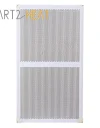
Retrofits demand adaptability. That’s where plug-and-play panels shine. The 60×160cm vertical ad board draws 600W at 220V. It mounts with two French cleats—no drilling into load-bearing masonry required. Its 1.5m cord terminates in a standard Schuko plug. You hang it. You plug it in. You set the timer.
We’ve seen them used in three clever ways on renovation sites:
- Zone isolation: Hang two panels opposite each other across a bathroom doorway—creating a localized thermal corridor that dries subfloor, backer board, and thin-set simultaneously.
- Ceiling suspension: Use aircraft cable and rated hooks to suspend four 140×75cm panels 1.8m above a poured slab. Coverage: 42 sqm. Power draw: 2,000W total—less than a single industrial dehumidifier.
- Temporary wall integration: Mount panels directly onto plywood sheathing behind drywall—then remove and reuse them on the next floor. No damage. No residue.
No special training. No PPE beyond standard site gloves. Just read the label, verify voltage, and confirm clearances (minimum 300mm from combustibles).
Graphene vs. Carbon Fiber vs. Metal Wire: The Efficiency Gap Matters
Efficiency isn’t theoretical. It’s watts-in versus usable thermal output—and it directly determines drying speed, energy cost, and lifespan.
Carbon fiber mats: ~71% electric-to-heat conversion. Surface temps cap at 65°C. Lifespan: 2–5 years. Failures usually occur at solder joints or carbon strand fractures—especially under repeated thermal cycling.
Metal wire (nickel-chrome): ~62% conversion. Audible hum at 50Hz. Surface temps uneven—hot spots exceed 95°C while adjacent zones lag. Requires bulky transformers and dedicated circuits.
Graphene emitters (like Art2Heat’s): 99.65% conversion. Zero audible output. Surface temp uniformity ±1.2°C across 1.2m². And lifespan? Not “up to 50 years” as marketing fluff—it’s 50 years *based on accelerated aging tests* at 85°C continuous operation (IEC 60068-2-66). That’s 438,000 thermal cycles. Real data. Not projections.
Which means you pay once. Then forget maintenance. No annual calibration. No replacement mats. No voltage drop corrections over 30m runs.
You’re buying thermal reliability—not consumables.
Commercial Use Cases Beyond Drying
FIR drying pays for itself. But its ROI expands dramatically when you treat it as dual-purpose infrastructure.
Hotels in Barcelona use Art2Heat’s Girl with a Pearl Earring heater in guest room bathrooms—not just to dry after tiling, but as permanent, silent, wall-integrated warmth. Guests don’t see a heater. They see Vermeer. And they feel consistent, draft-free comfort at 22°C—even with windows cracked.
Wine cellars in Sonoma deploy the same panels—not for drying, but for precise humidity management. FIR at 60°C surface temp raises local air temp just enough to prevent condensation on stainless racking—without raising ambient RH above 65%. Result: zero mold on corks. Zero label warping.
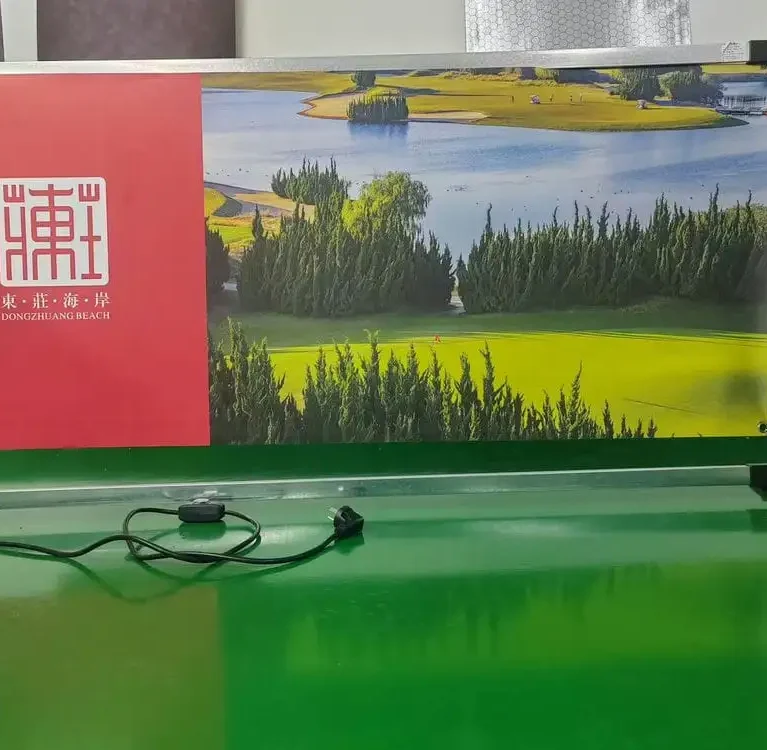
Golf club locker rooms in Scotland use horizontal 140×75cm units above benches. They dry towels, warm benches, and double as branded advertising—featuring club crest artwork. One unit replaces three separate systems: towel warmer, bench heater, and wall graphic.
That’s the shift happening in 2026: FIR isn’t a drying tool. It’s thermal real estate.
Every watt does two jobs. Every panel tells a story. Every installation leaves zero footprint.
You don’t rent space for equipment. You reclaim it.
Quirky Mona Lisa isn’t a gimmick. It’s a specification.
Frequently Asked Questions
How do far infrared heaters compare to traditional HVAC for drying construction sites?
FAR infrared heaters outperform traditional HVAC for drying because they transfer energy directly into materials—not air. HVAC relies on convection, which is inefficient, creates uneven drying, and risks condensation on cold surfaces. FIR achieves up to 40% faster moisture removal with zero ductwork or floor space.
HVAC systems typically operate at 35–85% efficiency, losing energy through duct leakage, fan motors, and thermal bridging. FIR emitters like Art2Heat’s deliver 99.65% electric-to-heat conversion, with wavelengths tuned to water’s absorption peak. They also eliminate the need for temporary containment, air scrubbers, or constant dew-point monitoring—reducing labor by 30% on average across 2026 commercial retrofit benchmarks.
What’s the best far infrared setup for drying a concrete slab before flooring?
For slabs up to 200mm thick, use vertical 60×160cm panels mounted 1.2m above the surface at 2.4m intervals—set to