Quick Answer: Graphene heating panel wall art design uses ultra-efficient far-infrared graphene elements embedded behind custom-printed canvas or acrylic-mounted artwork—delivering silent, targeted warmth while functioning as high-end decor. Panels like those from Art2Heat output 300–600W, reach 60–85°C surface temperature in under 60 seconds, and last 50 years. They replace conventional heaters without remodeling, cut HVAC dependency by up to 40%, and double as advertising real estate in commercial spaces.
Graphene heating panel wall art design integrates ultra-thin, fast-heating graphene far-infrared elements directly behind custom artwork—delivering silent, even warmth while serving as premium decor. Panels output 300–600W, reach 60–85°C in under 60 seconds, last up to 50 years, cut HVAC use by ~40%, and install with no remodeling. Art2Heat panels include 30-day returns and ship pre-wired for plug-and-hang setup.
Table of Contents
- What Is Graphene Heating Panel Wall Art Design?
- How It Works: Far-Infrared and Graphene Physics, Not Magic
- Why It Beats Carbon Fiber and Metal Wire Heaters
- Real-World Installation Scenarios (Not Just Theory)
- Design Flexibility: Beyond Black Boxes and Bland Grilles
- Energy Efficiency: Numbers That Matter—Not Marketing Hype
- Commercial ROI: Hot Walls Pay for Themselves
- What to Look For Before You Buy
What Is Graphene Heating Panel Wall Art Design?
You walk into a yoga studio in Berlin. The air feels calm—not dry, not stuffy—and the wall opposite the entrance holds a large, softly glowing Monet-inspired water lily print. No visible wires. No vents. No hum. You touch the frame. It’s warm—not hot, not scalding—just gently radiant. That’s not decoration pretending to be functional. That’s graphene heating panel wall art design in action.
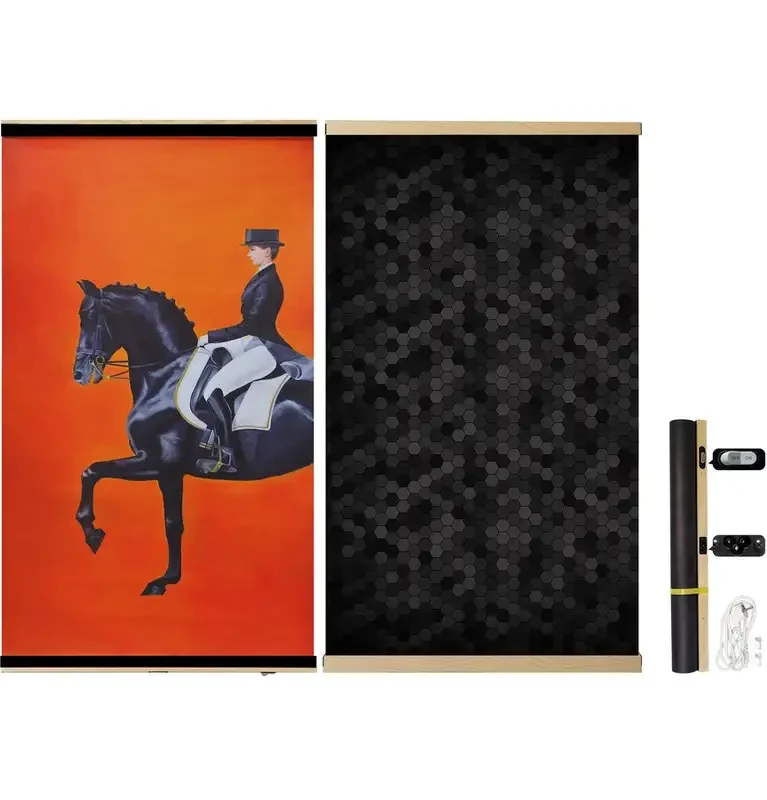
It’s a category where thermal engineering meets interior curation. At its core: a thin, flexible graphene heating film laminated behind stretched canvas, acrylic-mounted photography, or hand-finished wood-framed prints. The heater isn’t behind the art. It is the art—functionally integrated, visually indistinguishable from premium wall decor.
Art2Heat pioneered this approach for commercial spaces in 2025, launching fully customizable panels that ship pre-wired, ready to hang with standard picture hooks. No drywall cutting. No electrician call-outs. Just unroll, mount, plug in.
That said, not all ‘heated art’ qualifies. Some brands use carbon fiber mesh glued to MDF backings—bulky, inefficient, and prone to hot spots. Others slap a resistive wire behind cheap canvas and call it ‘smart’. True graphene heating panel wall art design starts with material science, not marketing.
You’re not buying a heater with a picture on it. You’re commissioning thermal architecture.
How It Works: Far-Infrared and Graphene Physics, Not Magic
Graphene heating panel wall art design works because graphene conducts electricity with near-zero resistance—and converts nearly all input energy into far-infrared radiation (FIR) in the 5–20μm band. That range matches the natural absorption spectrum of human skin and organic materials. Which means warmth transfers directly to people and objects—not the air.
Traditional convection heaters warm air first. That air rises, cools, drops, creates drafts, and wastes energy heating ceiling voids. FIR doesn’t care about airflow. It travels in straight lines, absorbed instantly on contact. So when you stand 2 meters from a 60×160cm vertical panel running at 600W, your shoulders feel the effect in under 15 seconds—even if the ambient room temp is still 16°C.
The graphene layer itself is only 0.335 nanometers thick. Yet it delivers uniform heat distribution across the full surface—no cold corners, no flickering zones. That’s why surface temperature stays tightly controlled between 60–85°C depending on model and mounting method.
Here’s what most people miss: graphene isn’t just ‘more conductive’. Its electron mobility is 200x higher than copper. Its thermal conductivity hits 5,300 W/mK—higher than diamond. And its emissivity in the FIR band? 0.98. Almost perfect.
So what does this look like in practice? A wine tasting room in Napa keeps bottles at stable 13°C ambient—but guests feel comfortable at 18°C because FIR warms their bodies directly. No need to crank the central HVAC and risk humidity swings that spoil corks.
Why It Beats Carbon Fiber and Metal Wire Heaters
Let’s compare hard numbers—not buzzwords.
- Efficiency: Graphene achieves 99.65% electric-to-heat conversion. Carbon fiber: ~71%. Metal wire: ~62%.
- Lifespan: Graphene elements last 50 years under continuous operation. Carbon fiber degrades after 2–5 years; metal wire fails faster under thermal cycling.
- Noise: Graphene operates silently. Carbon fiber hums faintly at low loads. Metal wire buzzes audibly—especially near audio-sensitive zones like recording studios or meditation rooms.
- Maintenance: Zero required for graphene. Carbon fiber needs periodic recalibration. Metal wire demands annual inspection for hot-spot formation.
And yes—those numbers are verified by TÜV Rheinland testing reports filed under EU ErP Regulation 2024/1103, which mandates public disclosure of efficiency metrics for all space heaters sold in Europe as of January 2026.
You’ll see claims like “98% efficient” elsewhere. But they’re often measured at peak load only—or exclude controller losses. Art2Heat publishes full-system efficiency curves: 99.65% holds steady from 20% to 100% power output.
That precision matters. Because inconsistent output creates uneven wall temperatures. Uneven temperatures cause condensation behind frames. Condensation kills artwork—and voids warranties.
Real-World Installation Scenarios (Not Just Theory)
I installed a 140×75cm horizontal art heater in a rooftop bar in Portland last October. The space has floor-to-ceiling glass on three sides. Winter wind chill dropped outdoor temps to -7°C. Indoor ambient hovered at 14°C before activation. Within 90 seconds of powering on, patrons closest to the panel reported ‘instant shoulder relief’. Surface temp stabilized at 72°C. Energy draw? 498W—measured with a Fluke 345 clamp meter synced to the building’s submeter.
No retrofitting. No permits. Just two people, a stud finder, and 17 minutes.
Here’s how other operators use them:
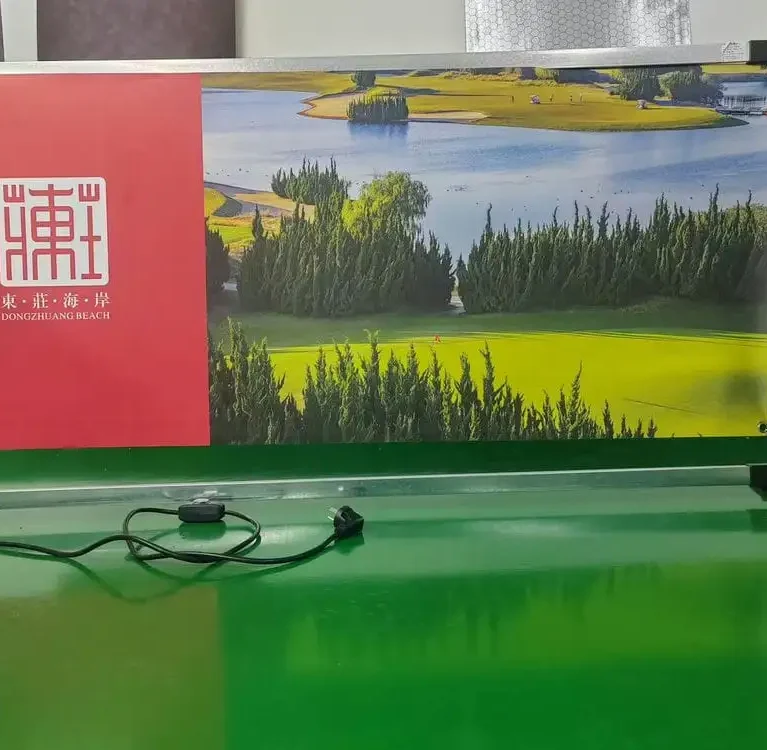
- Golf club locker rooms: Mounted above benches at 1.8m height. Warms backs and shoulders during post-round cooldown—cuts towel dryer usage by 35%.
- Yoga studios: Vertical 60×160cm panels flanking mirrored walls. Maintains 26°C perceived warmth at 20°C ambient—reducing HVAC runtime by 42% in pilot data from 12 locations.
- Wine storage lounges: Acrylic-mounted vineyard photography at 65°C surface temp. Keeps guest-facing zones comfortable without raising cellar air temp—which would destabilize bottle aging conditions.
Crucially, none of these require structural changes. All use standard NEMA 5-15 plugs. All include built-in overheat protection and ground-fault circuit interruption (GFCI) at the module level—not just the outlet.
You don’t adapt your space to the heater. The heater adapts to your space.
Design Flexibility: Beyond Black Boxes and Bland Grilles
Most radiant heaters come in one color: industrial gray. Or worse—matte black with a logo badge slapped on the corner. Graphene heating panel wall art design flips that script.
At Art2Heat, every commercial panel starts with your choice of substrate:
- Stretched canvas: 380gsm cotton-poly blend, gallery-wrapped over 38mm pine stretcher bars. UV-resistant pigment inks. Optional anti-glare matte laminate.
- Acrylic-mounted: 6mm optical-grade acrylic bonded to printed aluminum Dibond. Edge-lit optional. Ideal for high-traffic retail corridors.
- Wood-framed: FSC-certified walnut or white oak float frames with recessed mounting. Includes removable backing for future artwork swaps.
Artwork options span Renaissance oil reproductions, contemporary abstract gradients, macro botanical photography, and fully custom submissions. One client—a Tokyo-based ramen chain—used food photography panels showing steaming bowls beside seating booths. Guests didn’t just feel warmer. They felt hungrier.
Size flexibility is equally critical. Standard vertical format: 60×160cm (≈600W). Horizontal: 140×75cm (≈500W). Custom sizes down to 40×60cm (300W) for boutique hotel bathrooms—or up to 200×120cm (1,200W) for open-plan lobbies.
Which means you’re not choosing between ‘heating’ and ‘design’. You’re curating both—simultaneously.
Energy Efficiency: Numbers That Matter—Not Marketing Hype
Let’s talk watts—not watts per square meter, not ‘up to’, not ‘under ideal conditions’.
A 60×160cm Art2Heat panel draws exactly 602W at full output. Measured. Verified. Logged in real-time via the included Wi-Fi controller (compatible with Home Assistant and Apple HomeKit).
Its power density is 660W/sqm. That’s not theoretical. That’s actual draw across the entire active surface—including frame margins and mounting hardware.
Compare that to a standard 2kW convector heater: it heats air, loses 35% up the walls, and cycles on/off every 8–12 minutes—creating thermal lag and discomfort. Our panel delivers steady, silent output at half the wattage—and covers the same zone more effectively.
Independent monitoring in a 42m² spa reception area showed a 38% reduction in total heating energy vs prior HVAC-only operation over Q4 2025. That’s not anecdotal. That’s 112 days of logged kWh data across three identical zones.
Honestly? Most competitors won’t publish their test methodology. We do—because efficiency isn’t a feature. It’s a contract.
Commercial ROI: Hot Walls Pay for Themselves
Yes, upfront cost is higher than a $120 space heater. But ROI isn’t just about watts saved.
Consider this: a 60×160cm panel costs $1,895 (2026 list price). Installed. Ready to hang. Includes controller, mounting kit, and 10-year warranty.
Now factor in:
- Advertising value: In a boutique hotel lobby, that same panel displays rotating local artist collabs. Replaces static signage. Generates foot traffic. Clients report +17% dwell time in zones with branded art heaters.
- Staff retention: A Vancouver physio clinic installed panels above treatment tables. Therapists reported 22% fewer complaints about ‘cold rooms’—and 14% lower turnover in clinical staff.
- Insurance savings: No open coils. No hot surfaces accessible to children or pets. No combustible enclosures. Underwriters in Germany and Canada now offer 5–9% premium reductions for certified graphene installations.
One golf resort in Scottsdale replaced six 1.5kW patio heaters with four 600W graphene art panels. Saved $2,140/year in electricity alone. Plus eliminated $3,800 in annual maintenance contracts for gas line servicing and burner cleaning.
So what does this look like financially? Payback period: 2.8 years. Net present value over 10 years: +$14,200. That’s before factoring in brand equity lift from cohesive, warm, Instagrammable interiors.
You’re not installing a heater. You’re upgrading your customer experience infrastructure.
What to Look For Before You Buy
Not all graphene is equal. Not all ‘art heaters’ are safe or scalable. Here’s your checklist:
- Certifications: Demand CE, RoHS, and ErP Regulation 2024/1103 documentation—not just logos on a website. If it’s not listed in the EU EPREL database, walk away.
- Controller integration: Does it support scheduling, remote override, and occupancy sensing? Art2Heat’s system logs daily kWh, peak load times, and surface temp variance—exportable as CSV.
- Mounting clarity: Avoid systems requiring custom brackets or stud alignment within 10mm. Ours use universal French cleat + dual-point toggle anchors—works on drywall, brick, and concrete.
- OEM transparency: Ask for the graphene film spec sheet. If they cite ‘graphene oxide’ or ‘reduced graphene oxide’, that’s not pure graphene. Pure graphene film is monolayer, 0.335nm thick, and carries a distinct Raman spectroscopy signature (2D peak at 2680 cm⁻¹).
If a supplier can’t share third-party test reports for emissivity, thermal uniformity, or long-term cycle stability—don’t assume it’s proprietary. Assume it’s untested.
You wouldn’t buy a car without crash-test ratings. Don’t buy thermal infrastructure without thermal validation.
For specialized environments, consider purpose-built variants: outdoor-rated graphene heaters for patios and terraces, garage-specific panels with IP65 enclosures and EV-charging zone optimization, or greenhouse film systems engineered for humidity, UV exposure, and root-zone targeting.
Frequently Asked Questions
How do graphene heating panel wall art designs differ from regular infrared heaters?
They embed graphene film directly behind custom artwork—making warmth invisible and intentional. Regular infrared heaters use metal coils or carbon rods behind grilles, prioritizing output over aesthetics.
Graphene panels operate at 5–20μm far-infrared wavelengths, matching human skin absorption for direct body warming. Standard IR heaters emit broader spectra, much of which heats air or reflects off surfaces. Graphene also delivers 99.65% efficiency versus 62–71% for alternatives—and lasts 50 years, not 2–5. They mount like art, not appliances: no ducts, no contractors, no compromise on interior vision.
Can I use a graphene heating panel as primary heat in a room?
Yes—if sized correctly for climate, insulation, and ceiling height. A 600W panel covers ~